Watercolor painting is a beautiful art form that lets artists make stunning, flowing masterpieces. It’s great for both beginners and experienced painters. This guide gives you 10 key tips to improve your watercolor skills. You’ll learn from the basics to advanced techniques to make your paintings better.
Watercolor painting is both fun and challenging. It combines control and spontaneity in a unique way. This article will cover the basics and advanced techniques of watercolor painting. You’ll learn how to pick the right supplies and master key techniques. Get ready to boost your artistic skills and start your watercolor journey!
Mastering the Art of Watercolor Painting
Watercolor painting is a captivating art form that combines control and spontaneity. To master it, you need to know the basics and explore various techniques. We’ll cover the basics and share secrets for beginners in this section.
Understanding the Basics
Watercolor painting starts with knowing how water and pigments work together. Artists learn to use the medium’s fluidity and transparency. Techniques like wet-on-wet and dry brush help create beautiful effects.
Learning the basics is key. This includes mixing colors, handling brushes, and choosing the right paper. These skills are essential for unlocking watercolor’s full potential.
Exploring Different Techniques
Watercolor painting also offers many specialized techniques to enhance your work. Glazing creates dreamy, atmospheric effects, while sgraffito adds bold textures. Trying out these techniques can open up new creative possibilities.
By mastering these methods, you can develop a unique style. This will make your work stand out.
Whether you’re experienced or just starting, diving into the basics and trying new techniques is crucial. With patience, practice, and a willingness to embrace the medium’s unpredictability, you can master watercolor painting. This will help you create stunning art.
Essential Watercolor Supplies
Starting with watercolor painting means getting the right supplies. You’ll need top-notch paints, versatile brushes, and the right paper. Each item is key to bringing your art to life. Let’s look at the must-have supplies for creating beautiful watercolor art.
Watercolor paints are the heart of your art. Choose professional-grade paints for a wide color range and intensity. Brands like Winsor & Newton, Sennelier, and Daniel Smith are great choices. They offer vibrant colors and smooth consistency.
Brushes are just as crucial. You’ll need round, flat, and liner brushes for different effects. Quality brushes from brands like Raphael, Princeton, or Da Vinci help you achieve fine details and broad strokes easily.
Don’t forget the watercolor paper. Pick acid-free, high-quality paper made for watercolor. Cold-pressed or rough surface papers are best for letting paint flow and blend well.
Choosing the right watercolor supplies prepares you for a creative journey. With the best paints, brushes, and paper, you’re ready to explore watercolor’s endless possibilities.
Choosing the Right Paper
Choosing the right paper is key in watercolor painting. The texture and weight of each paper type affect your artwork’s outcome. It’s important to know the differences in watercolor paper to improve your skills.
Exploring Paper Textures
Watercolor paper has various textures, each with benefits. Hot-pressed paper is smooth, great for detailed work. Cold-pressed paper balances smoothness and texture, ideal for many techniques. Rough paper gives a textured look to your paintings.
Considering Paper Weight
The paper’s weight is also crucial. Heavy papers, 300 to 500 grams per square meter, handle water well without warping. They’re good for bold work. Lighter papers, 140 to 300 grams per square meter, are perfect for detailed, delicate work.

Preparing Your Watercolor Palette
Creating a well-organized watercolor palette is key to vibrant and consistent colors in your art. This guide will help you pick the right watercolor pigments and set up your watercolor palette setup. This ensures efficiency and boosts creativity.
Selecting Pigments
When choosing watercolor paints, think about each pigment’s unique traits. Some are bold and opaque, while others are delicate and transparent. Try out different hues, from earthy tones to vibrant blues. Start with a core set of primary and secondary colors for your art.
When picking watercolor pigments, focus on their lightfastness and staining qualities. These affect how your art looks over time and the techniques you use. Knowing each paint’s traits lets you mix and layer colors with ease, creating the perfect palette for your vision.
Achieving Vibrant Colors
Watercolor painting is all about layering and glazing to get rich, vibrant colors. By learning how to mix colors, glaze, and layer, artists can make stunning, glowing paintings.
To get vibrant colors in watercolor, work with the paint’s fluidity. Don’t fight it, use it. Mix different colors on your palette to make unique, lively hues. Try glazing to add transparent layers of color for depth and shine.
Layering is another way to make your watercolor paintings pop. Start with a light base and add more color layers, letting each dry before the next. This makes your painting look deep and rich. Be patient and let the paint work its magic – rushing can make colors dull.
Mastering color mixing, glazing, and layering in watercolor will help you make paintings that are full of life and beauty. This will show off the true power and beauty of this flexible medium.
Art & Music: Embracing Watercolor’s Fluidity
Watercolor painting is a captivating medium that celebrates its natural fluidity and spontaneity. Artists learn to work with the watercolor painting flow and watercolor painting fluid medium. They let the paint lead their creative process.
Working with watercolors means using the paint’s unpredictability to your advantage. By embracing the watercolor painting spontaneity, artists can make stunning, expressive art. This art shows off the unique qualities of watercolors. The balance between controlling and letting go is key to the magic.

Like music, watercolor painting can create a rhythmic, lyrical quality. The flowing brushstrokes and color play bring movement and emotion to the artwork. This makes the viewer feel a deeper connection to the art.
To truly embrace watercolors, artists need trust and flexibility. They must let go of strict control and respond to the paint’s behavior. This approach can be thrilling and tough, but it leads to amazing results.
Mastering Brush Strokes
Watercolor painting changes a lot with how you handle your brushes. Learning different brush strokes is crucial for creating unique textures. The wet-on-wet method is a great way to explore watercolor’s fluidity.
Wet-on-Wet Technique
The wet-on-wet watercolor technique, or “wash” method, uses paint on a damp surface. This makes colors blend and creates soft edges and patterns. By learning about brush techniques, you can use the wet-on-wet method for stunning effects.
To start, wet your watercolor paper with a damp brush. Then, put paint on the wet surface, letting colors mix. Try different strokes like flowing or dabbing to get various textures. This method brings spontaneity and fluidity to your art.
Getting good at wet-on-wet watercolor takes practice. But with time, you’ll know how watercolor works and how to use it. Adding these techniques to your painting will open up new ways to express yourself and make your art stand out.
Capturing Light and Shadows
Mastering watercolor painting means understanding light and shadow well. Learning to capture how light and dark interact adds depth and drama to your art. This is why value studies are so important.
Understanding Value
Value in watercolor painting talks about how light or dark a color is. It’s key to making your paintings look real and striking. With watercolor value studies, you can see the beauty of light and shadow up close.
Knowing about watercolor contrast helps you add depth and volume to your paintings. Light and shadow, along with their contrasts, guide the viewer’s eye and stir emotions. These skills help you bring out the beauty of light and shadow in your watercolors.
Watercolor’s fluidity lets you play with light and shadow in many ways. By grasping value and contrast, you can make paintings that amaze and inspire.
Painting Landscapes and Seascapes
Watercolor lets artists capture the beauty of nature with ease and beauty. It’s perfect for those who love the wide views of landscapes or the beauty of seascapes. This medium makes it easy to bring these scenes to life on canvas.
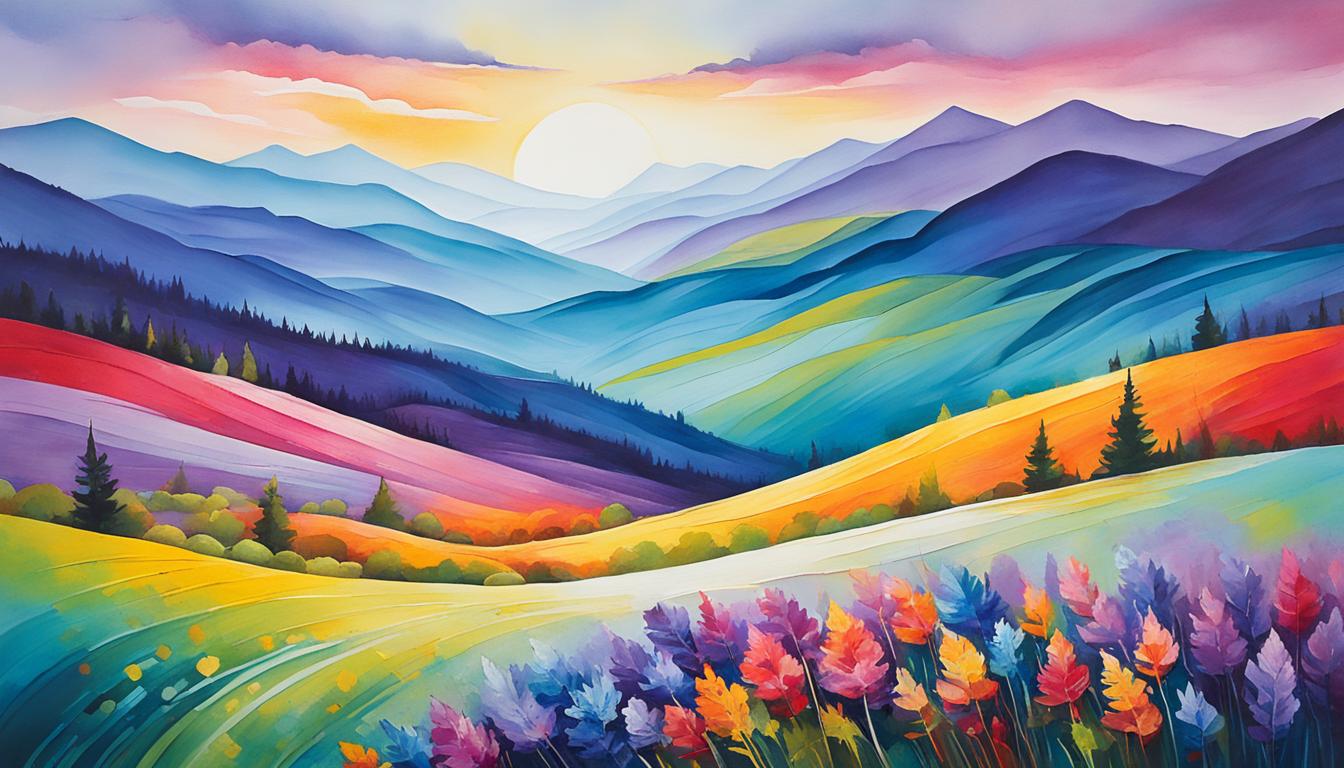
When painting watercolor landscapes, focus on light and shadow. Notice the textures of rocks and leaves. Try wet-on-wet for soft backgrounds and dry brushwork for details. Aim to capture the mood of the scene, like a quiet forest or a towering mountain range.
For watercolor seascapes, use the medium’s fluidity to show the ocean’s changing moods. Choose bright colors and bold strokes for waves, sky reflections, and light and shadow. Try salt or sponging for foam and spray effects. Use empty space to show the sea’s vastness.