Starting an art collection can be thrilling and a bit scary. It doesn’t matter if you’re new to art or have been a fan for years. This guide will give you the tools and advice to start your own art collection. We’ll talk about finding art that fits your style, checking its history, and making sure it’s real.
Art collecting is more than just buying pretty things. It’s about connecting with art that speaks to you. In this article, we’ll walk you through the basics of starting an art collection. You’ll learn about different art styles, how to set a budget, and how to meet artists and other collectors. By the end, you’ll know how to start your art collecting journey with confidence.
Defining Your Artistic Preferences
Before starting your art collecting journey, it’s key to know what art you like. This helps you make better choices and ensures your collection shows your unique taste. Whether you love the boldness of abstract art or the fine details of classical art, figuring out your style is crucial.
Exploring Different Artistic Styles
The art world is huge and full of different styles. You can find everything from the classic beauty of Renaissance art to the new ideas of contemporary art. As you look at various styles, notice what grabs your attention. This could be the colors used, how forms are shaped, or the deep meanings behind the art.
Considering Your Budget
Art collecting can be very rewarding, but you should think about your budget. It doesn’t matter if you’re just starting or have been collecting for years. Setting a budget that fits your finances is important. It helps you make smart choices and keeps you from spending too much, so you can keep adding to your collection.
Knowing what art you like and sticking to a budget will help you build a collection that shows your personal taste. Remember, the fun of collecting art is in the discovery. Let your passions lead the way.
Art & Music
Exploring the connection between art and music can be very rewarding for art collectors. Music has always inspired artists, leading to many famous artworks. These works take their spirit from the sounds of music. On the other hand, art can also inspire musicians, shaping their music’s mood and themes.
Adding both art and music to your collection makes for a rich experience. It touches on both sight and sound. From the beauty of art to the feelings music evokes, combining them creates a deep journey for collectors.
Think about showing art that reflects a musical style or collecting music linked to famous artists. The blend of art and music offers a fresh and moving view. As you start collecting art, see how you can mix these art forms to make your collection more interesting.
Researching Art Galleries and Dealers
Exploring art galleries and dealers is key to building a great art collection. Start by looking at local galleries in your area. They often feature emerging and well-known artists. Visiting these places gives you a peek into the local art world and helps you find art you like.
Don’t forget about art fairs too. They’re great for meeting art dealers from all over. At these events, you can find new artists, stay updated on trends, and maybe even buy art for your collection.
Local Art Galleries and Art Fairs
Getting involved with local galleries and art fairs is rewarding. Local galleries know the regional art scene well and can suggest art based on what you like. Art fairs, however, show you a wide variety of art styles and mediums. They’re a chance to meet new artists and grow your collection.

By looking into art galleries and dealers, both local and national, you can create a diverse art collection. Remember, collecting art is a journey. Keep an open mind and be ready to find new and exciting art.
Building a Network of Artists and Collectors
Being an art collector means building a strong network in the art world. This network lets you find exclusive art, get insider tips, and feel part of a community. It helps you keep up with trends, spot new talents, and join private art events.
Start by going to local art shows, gallery openings, and art fairs. Talk to gallery owners, curators, and other collectors to learn from them. Joining online and offline art collector groups is also a great way to meet people who share your interests.
Don’t forget to reach out to artists directly. Whether they’re new or well-known, talking to them can deepen your understanding of their art. This could lead to special pieces or even art made just for you.
The art collecting network is more than just buying art. It’s about building a community that loves art as much as you do. By connecting with others, you’ll grow your collection and enjoy the art even more.
Understanding Art Provenance and Authenticity
Investing in art is thrilling, but knowing about art provenance and authenticity is key. Provenance is the history of who owned an artwork. It’s crucial for checking if a piece is real and valuable. It helps collectors make smart choices and buy genuine, valuable art.
Importance of Provenance Documentation
Having detailed provenance is a must for collectors to prove an artwork’s authenticity. This can be through receipts, records of exhibitions, auction catalogs, or statements from past owners. By looking at the ownership history, collectors can check if the art is real and its worth in the art world.
Provenance not only makes a piece more valuable but also builds trust with collectors. Clear provenance helps spot originals from fakes or copies. Knowing about provenance helps collectors make better choices and grow a valuable art collection.
Investing in Emerging versus Established Artists
Building your art collection means deciding between emerging and established artists. Each choice has its pros and cons. Emerging artists could see big value increases but come with more risk. Established artists have a solid track record but may cost more.
Investing in emerging artists lets you spot new talents and possibly earn big returns if they become popular. These artists are often more affordable, helping you grow your collection. But, their success is not guaranteed, so it’s key to research their career and potential.
Networking with art galleries and going to art fairs can help find promising emerging artists.
Established artists, on the other hand, have a solid reputation and a history of praise. Their work is likely to hold its value and could increase in worth over time. Even though they might be pricier, their proven success makes them a safer choice for art investment.
To balance your investment, mix emerging and established artists in your collection. This strategy helps manage risks and lets you enjoy the growth of both new and well-known artists. Talk to art experts, visit galleries, and keep up with trends to make choices that fit your goals and budget.
Incorporating Art into Your Living Space
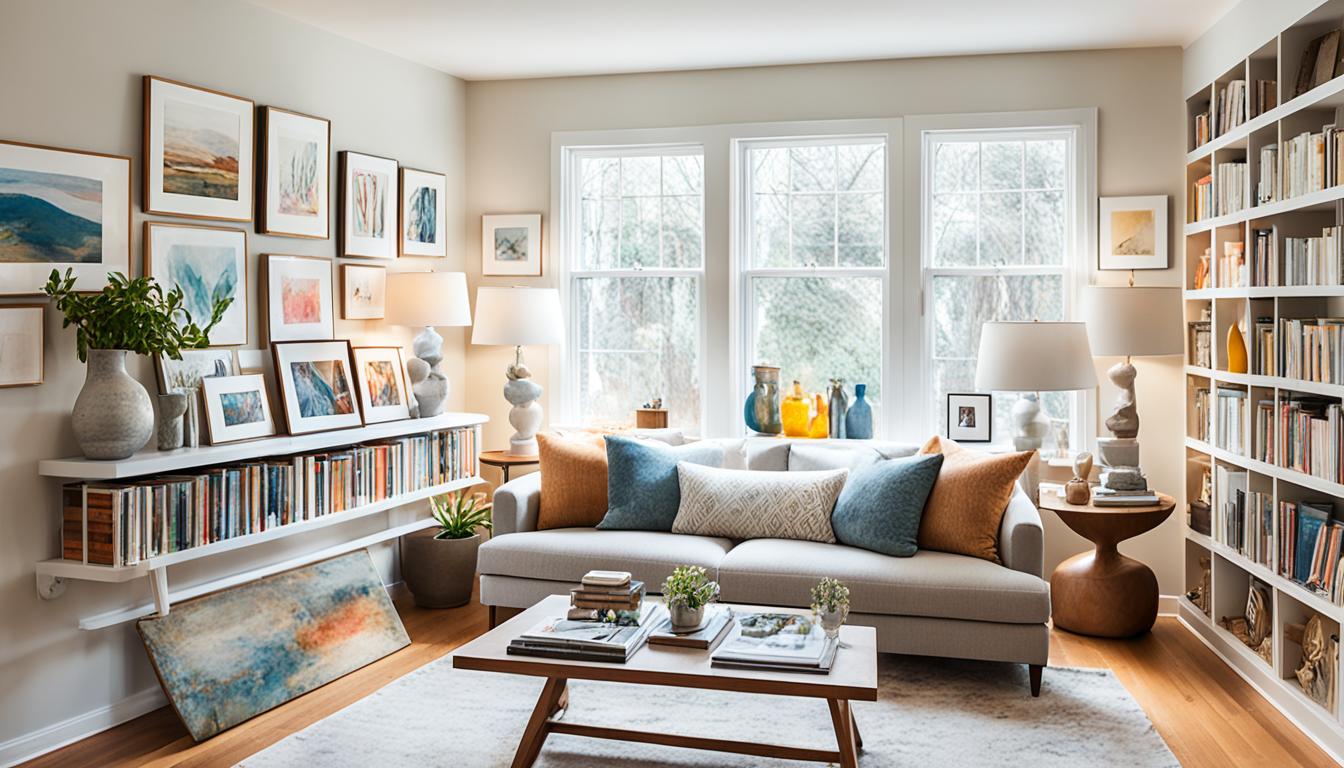
Displaying your art collection in your living space can be a fun and rewarding experience. To make the most of your artwork, think about the lighting and where you place it. Good lighting can make the colors and textures pop, making your space welcoming and visually appealing.
Lighting and Display Tips
When showing off art, the right lighting is crucial. Choose lights that can be adjusted and dimmed to spotlight your artwork. Track lighting or spotlights mounted on walls are great for focusing light exactly where you need it. Try different angles and light levels to highlight your art just right.
Where you place your art is also important. Don’t hang it too high or too low, as it can change how people see it. Place it at eye level for the best viewing experience. Think about the colors of the wall, furniture, and the room’s layout to make sure your art fits in well.

With careful lighting and placement, you can turn your living space into a gallery. Your art collection will be the main attraction, showing off your personal style and taste.
Caring for Your Art Collection
Looking after your art collection is a big job for any art lover. It involves proper handling, storage, climate control, and conservation. Knowing the best ways to care for your art collection is key to keeping your valuable pieces safe for a long time.
Start with art preservation by handling your art carefully. Don’t touch the surface of paintings, drawings, or photos. Use clean, dry hands or gloves when you need to move or check on your art. Keep your art in a place with controlled climate, away from sunlight, too much humidity, or big temperature changes. This helps protect it from damage.
Regular art conservation is also important for your collection’s life. Think about getting help from professional conservators for cleaning, restoring, and protecting your art. They can tell you the best ways to keep your art safe and stop it from getting worse.
By doing these simple but important things, you can make sure your art collection stays a joy and inspiration for years. Remember, taking care of your collection is a big job of love. It will reward you over the years.
Expanding Your Knowledge through Art Events
Getting into the art world can be very rewarding. Going to art events like exhibitions and gallery openings is a great way to learn more. These events let you see the latest trends and artistic styles. You can also find new artists and keep up with the changing art scene.
Art Exhibitions and Openings
Art exhibitions are full of inspiration and learning. By visiting galleries and museums, you can see many artistic styles. You’ll find classic works and modern art. There are talks, discussions, and tours that give you insight into the art world.
Gallery openings are great for meeting art lovers and the artists themselves. They show the work of new and known artists. You can talk to the artists, meet collectors, and learn about the art market. These events can help you spot artists who are on the rise.
Whether you’re an art collector or just starting, art events can change your view. They help you appreciate art more and find new ways to express yourself creatively.
Tax Implications of Art Collecting
As an art collector, knowing about tax rules is key. Art collecting can be rewarding but also complex with taxes. Understanding deductions and capital gains is crucial to make the most of your collection.
Art collecting lets you claim some tax deductions. You can deduct costs like insurance, storage, and appraisals. Donating art to charity can also get you a tax break for the art’s value.
When you sell art, think about capital gains tax. The tax depends on how long you owned the art and your income. Knowing this can guide your decisions on buying, selling, and managing your art.
Dealing with art collection tax implications can be tricky. But, a tax expert can help you use benefits and lower taxes. By being informed and proactive, you can enjoy your art collection more while managing its financial side well.
Passing Your Collection to Future Generations
Building an art collection is a labor of love. Ensuring its preservation for future generations is a noble goal. You need to plan carefully and make informed decisions. Estate planning, insurance coverage, and clear communication with your heirs are key to a smooth transfer.
Start by documenting your collection’s provenance and authenticity. This detailed record protects your assets’ value and helps your heirs understand each piece’s history and significance. Work with art appraisers and legal experts to make sure your estate plan reflects your collection’s true value.
Also, look into insurance options to protect your collection from losses or damages. There are many strategies, from specialized art insurance to including your collection in your estate plan. By being proactive, you give your heirs the tools to keep the art you’ve collected safe.