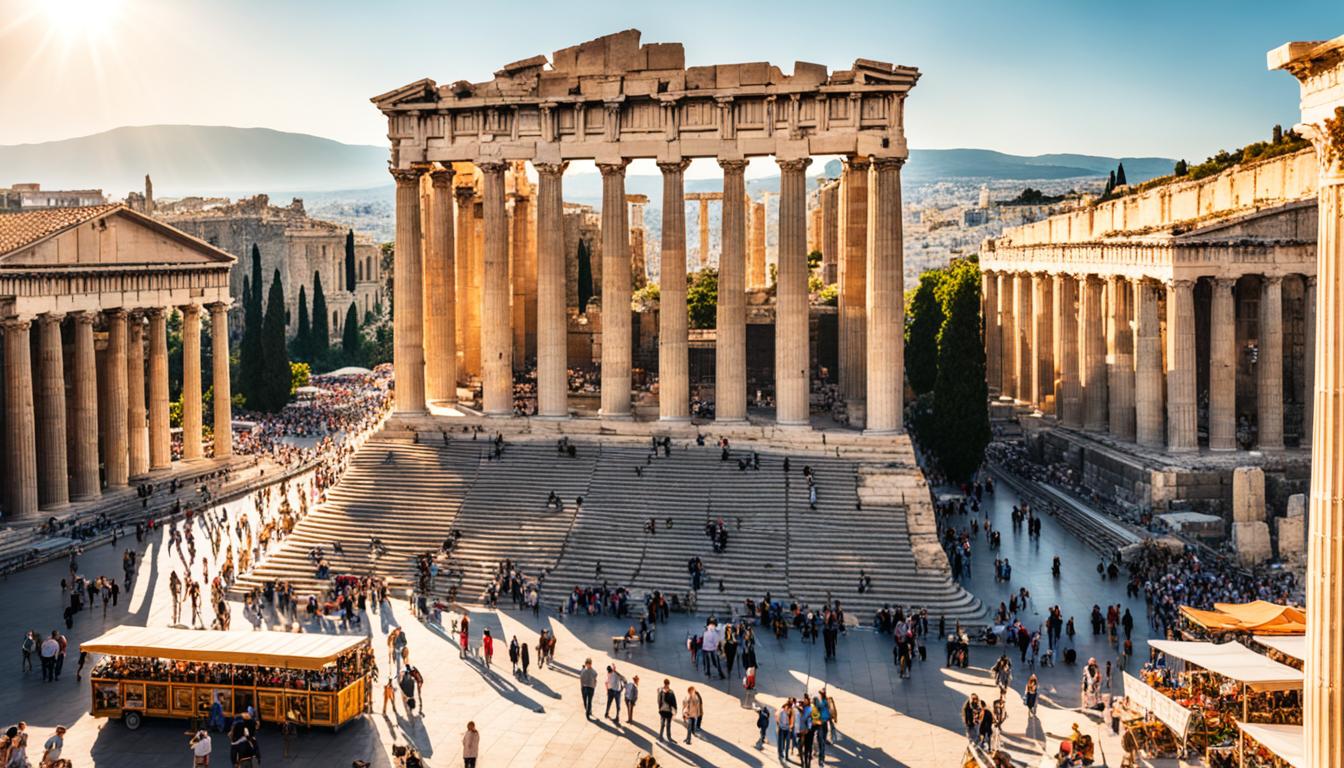
Dive into the world of ancient Greek culture. Here, the art and architecture show the lasting impact on Western civilization. Learn about the start of classical art, from sculptures that lasted centuries to the beauty of Greek pottery. See how these works changed the ancient world.
The ancient Greeks were known for their amazing art and buildings. They left a legacy that still moves people today. From the stunning Parthenon to the detailed pottery, this journey into ancient Greek art and architecture takes you back to a time of great creativity and new ideas.
The Birth of Classical Artistry
See the start of classical art in ancient Greece. This era brought us some of the world’s most famous sculptures and changed Greek pottery from just useful to art. Explore the deep cultural roots that made this civilization’s art so great.
Sculptural Masterpieces that Stood the Test of Time
Ancient Greek sculptors were true experts. They made art that has lasted for centuries. Their statues and reliefs still amaze people all over the world. They showed the beauty of the human form and deep emotions.
The Evolution of Greek Pottery: From Utilitarian to Artistic
Greek pottery used to be just for everyday use. But it changed into something beautiful. Potters got better at their craft, using detailed designs and bright colors.
They turned simple clay pots into art. This shows how skilled the ancient Greeks were and how art shaped their culture.
Iconic Architectural Wonders
The ancient Greeks made a lasting impact on architecture, leaving behind structures that still amaze and inspire us. The Parthenon stands out as a key example of their architectural legacy. It’s a symbol of ancient Greece’s cultural heritage.
The Parthenon: A Marvel of Doric Grandeur
The Parthenon sits on the Acropolis in Athens, showcasing the Doric style. Built during ancient Greece’s golden age, it highlights the builders’ skill and creativity. Its perfect design, detailed sculptures, and beautiful columns prove the ancient Greeks’ architectural skill.
The Parthenon’s design, with its simple yet elegant columns, shows the ancient Greeks’ love for order and balance. It’s not just a cultural symbol but also shows the lasting impact of ancient Greek architecture on the world.
Culture: The Essence of Greek Artistry
The ancient Greek culture was a source of deep artistic expression. It was based on their beliefs, traditions, and values. These values were seen in their architecture and sculptures, showing the art’s deep connection to their society.
Their art and architecture showed their love for the gods and the human form. The Parthenon was more than a temple; it was a symbol of their culture. It showed their respect for deities and their dedication to art.

The sculptures of ancient Greece, like the Venus de Milo, captured the beauty of the human form. They became symbols of Greek culture, showing the skill of their creators. These pieces also showed the cultural values that guided their creation.
Ancient Greek culture has greatly influenced Western art. Their architectural styles and Greek mythology have shaped art and literature. The legacy of ancient Greeks still affects our culture today.
Mythological Influence on Greek Art
The ancient Greeks drew a lot from their deep mythological past. This can be seen in the symbols in their sculptures. The gods, heroes, and legendary figures of Greek myths were not just stories. They were the heart of ancient art.
Decoding the Symbolism in Greek Sculptures
The statue of Zeus at Olympia and the Aphrodite of Knidos show the deep cultural meaning in Greek sculptures. These symbols were not just for show. They let us see into the beliefs and values of ancient Greece. By looking at these symbols, we learn about the myths that shaped their art.
Mythological images in Greek art were not just for looks. They were a way to add deeper meaning and importance to the art. From the powerful gods to the brave deeds of heroes, ancient Greek sculptors used myths to create symbols that still move us today.
The Acropolis: A Sacred Citadel of Antiquity
The Acropolis sits high in Athens, showing off ancient Greece’s architectural and cultural wonders. It’s a sacred place that has amazed people for ages. It’s a symbol of the greatness and importance of ancient Greek culture.
The Acropolis was the heart of ancient Athens, filled with beautiful temples and monuments. The Parthenon, a masterpiece of Doric architecture, is its highlight. This temple, honoring Athena, shows the ancient Greeks’ skill in combining beauty with strength.
There are more amazing buildings on the Acropolis, each with its own story. The Erechtheion, the Propylaea, and the Temple of Athena Nike add to the site’s beauty. Together, they form a stunning view of ancient Greek architecture.
Walking through the Acropolis feels like stepping back in time. You’re surrounded by the history and legacy of this sacred place. It’s not just a historical site but also a symbol of human creativity and the lasting power of culture.
Greek Temples: Sanctuaries of Architectural Brilliance
The ancient Greek temples are famous for their architectural beauty. They show the creativity and cultural impact of ancient Greece. Let’s explore the unique styles of Doric, Ionic, and Corinthian orders. Each style highlights the design principles that made these structures iconic.
The Order and Harmony of Doric, Ionic, and Corinthian Styles
The Doric style is known for its simple yet elegant columns. It was the first and most common of the three orders. Its design focused on proportion and symmetry, showing the Greeks’ love for order and balance.
The Ionic order had more decorative columns with volute capitals. These columns looked graceful and sophisticated.

The Corinthian style was the most detailed, with column capitals covered in acanthus leaves and scrolls. This style showed the growth of ancient Greek culture and art. It showed how the Greeks aimed to improve their architectural skills.
These architectural styles didn’t just shape the look of Greek temples. They also showed the cultural and philosophical values of ancient Greek society. Their impact is still seen in the Western world, inspiring and influencing modern design.
The Legacy of Greek Theater
Ancient Greek theater has deeply influenced the dramatic arts. It has shaped Western civilization’s culture. Its impact still echoes today, inspiring artists and performers across generations.
At the core of this tradition is the power of mythology and exploring human nature. Playwrights like Aeschylus, Sophocles, and Euripides created stories that touched on human experiences. Their works, filled with themes of tragedy and justice, are still studied and performed around the world.
Ancient Greek theater also introduced new ways of staging plays. The use of masks and the amphitheater layout made performances more engaging. These innovations have shaped theater, opera, and even film, leaving a lasting impact.
Today, ancient Greek theater’s legacy continues to influence Western culture. It inspires artists, scholars, and audiences. By exploring this art form, we appreciate the lasting impact of ancient Greek culture on the arts.
Ancient Greek Painting: A Lost Artform Rediscovered
The art of ancient Greece has amazed us with its buildings and sculptures. But, the art of Greek painting has often been forgotten. Now, it’s being rediscovered, showing us the rich culture and art of ancient Greece.
Exploring the Techniques and Materials of Greek Frescoes
Ancient Greek painters were experts in frescoes. They painted on wet plaster walls with vivid colors and detailed designs. They used earth pigments, mineral paints, and organic dyes for their art.
Many of these frescoes are now lost or damaged. They fell victim to time, disasters, and people. But, archaeologists and art historians are working to save what’s left. They help us see the beauty of ancient Greek art again.
Exploring ancient Greek painting shows us its deep cultural meaning and techniques. The frescoes’ bright colors and detailed designs inspire us. They let us see the artistic legacy of ancient Greece.
The Influence of Greek Art on Western Civilization
Ancient Greek art has deeply influenced Western culture. Its art and architecture have inspired many artists, architects, and thinkers. This has shaped the artistic, cultural, and intellectual growth of the West.
The art of ancient Greece is known for its lasting beauty. From sculptures to architectural wonders, its impact is huge. The Parthenon stands as a symbol of Western civilization. Its columns and sculptures show the creativity of the ancient Greeks.
Ancient Greek art’s impact goes beyond just art. It has influenced Western culture deeply. Themes and symbols from Greek art have become key to Western art, inspiring many works over the years.
The legacy of ancient Greek art still guides the West’s cultural heritage. It inspires artists, architects, and thinkers. The lasting effect of Greek art on Western civilization shows the power of creativity. It also shows how art can cross time and space.
Preserving the Timeless Beauty of Ancient Greek Art
The ancient Greek civilization has left a lasting impact on art. It has captured the world with its beauty and cultural importance. Now, we are working hard to keep this valuable heritage safe. We aim to protect the famous sculptures, buildings, and artifacts that have lasted for so long.
Efforts are focused on saving the Parthenon and other ancient Greek art. We use international teamwork and special restoration methods. New digital tools help us document, analyze, and fix these pieces. They also help teach people and make art more engaging.
Ancient Greek art is very important to us. Preservationists work hard to keep these artifacts safe. They do this not just for their beauty but also for what they teach us about the past. By keeping ancient Greek art alive, we let its beauty and stories continue to inspire us all.