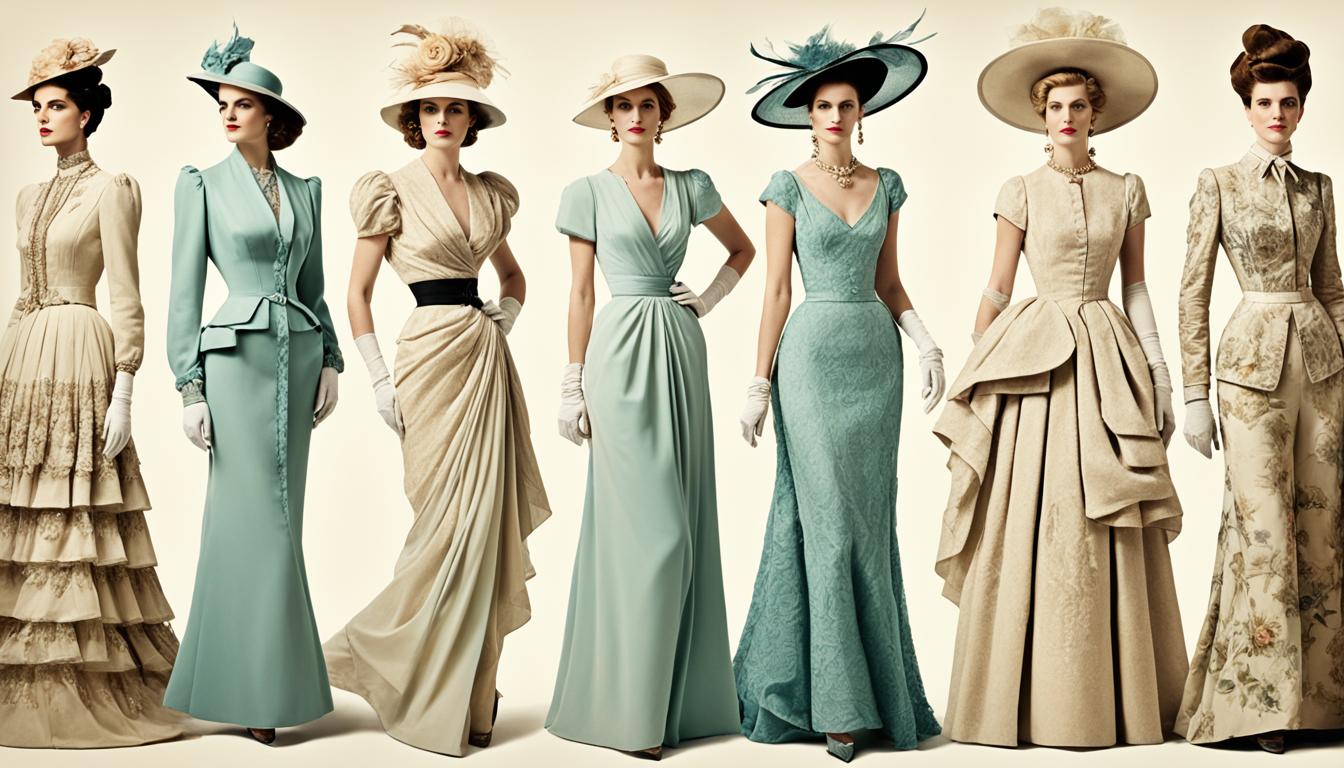
Fashion shows how we express ourselves through clothes. It reflects the big changes in culture, society, and technology. From ancient times to today, fashion has changed a lot. It tells us about the mix of clothes and human history.
This article takes you on a journey through fashion’s history, from the past to the future. We’ll see how clothes have changed because of culture, art, and society. By looking at fashion’s impact, we learn about big changes in our world.
Fashion has changed a lot, from ancient times to today. It’s been shaped by culture and society. Let’s explore this journey together, seeing how clothes have changed and influenced us.
Unveiling Ancient Civilizations’ Style Statements
The fashions of ancient civilizations give us a peek into their culture and art. They show us the elegance of ancient Egyptian style and the sophisticated Greek attire. These styles still inspire today’s designers and fascinate fashion lovers.
Egyptian Fashion: Elegance in Simplicity
Ancient Egyptian fashion was all about simple elegance. It showed their love for order and balance. Egyptians wore sheath dresses and pleated robes with minimal but striking details like embroidery or bright colors.
This style showed their respect for timeless beauty. They could make simple clothes into art.
Greek Attire: Draped in Sophistication
Unlike Egypt, ancient Greece’s fashion was more complex. It showed their artistic and smart side. Greeks used luxurious fabrics like linen and wool in their clothes.
These fabrics were key to their social and cultural life. Their clothes, like flowing togas, were not just for covering up. They showed their love for beauty and the human body.
Today, designers still look to ancient fashion for inspiration. By learning about these styles, we see how fashion has always been important. It shows the beauty and lasting impact of ancient fashion.
Medieval Fashion: Reflecting Social Hierarchies
In the medieval era, fashion showed off social status. Clothes told a lot about a person’s place in society. Nobles, clergy, and commoners all had their own styles, making it easy to see who was who.
At the top, royalty and nobles wore fancy robes and gowns. These were covered in embroidery and jewels, showing off their wealth and high rank. This fancy medieval fashion was a big deal back then.

The clergy wore special clothes too, like long cassocks and fancy vestments. These clothes set them apart from everyone else. They showed they were important in a spiritual way. Common people wore simpler clothes made from cheaper materials.
This way of dressing showed who was in charge and who wasn’t. Only the rich could afford fancy clothes. These clothes were like a badge of honor, showing a person’s status in medieval society.
The Renaissance: Opulence and Artistic Expression
The Renaissance brought a new era of fashion, filled with opulence and artistic flair. Italy was at the heart of this change, showcasing sumptuous fabrics, intricate embroidery, and bold styles. This fashion became a symbol of the era’s cultural and artistic growth.
Italian Renaissance Fashion: Sumptuous Fabrics and Ornate Details
Italian Renaissance fashion was all about luxury and detail. Wealthy Italians wore the finest fabrics like velvet, silk, and brocade. These fabrics were often decorated with intricate embroidery and elaborate patterns. Clothes had bold shapes, with flared sleeves, high collars, and cinched waists, making a strong statement.
The focus on luxurious materials and detailed craftsmanship showed the Renaissance’s love for art and individuality.
The Italian style also drew inspiration from ancient Greece and Rome. It combined historical elegance with modern luxury. This blend of old and new made Renaissance fashion in Italy truly unique. It showcased the era’s artistic and cultural rebirth.
Baroque Era: Extravagance and Grandeur
The Baroque period was known for its lavish and ornate style. This style deeply influenced fashion. French Baroque fashion stood out with its dazzling embellishments and bold shapes.
French Baroque Fashion: Lavish Embellishments and Bold Silhouettes
In the Baroque era, French fashion became a way to show off the era’s art and culture. Clothes were filled with intricate embroidery, flowing ruffles, and shiny metallic bits. This made them look grand and fancy. The shapes were big, with big skirts, tall wigs, and fancy accessories that got everyone’s attention.
This fashion showed off the rich life of the French court. Clothes were a sign of wealth, status, and power. Bright colors like deep reds, blues, and golds were big hits, adding to the luxury. This style didn’t just impress the French elite but also spread to other parts of Europe.
Today, the fancy looks of French Baroque fashion still inspire designers. They use the era’s iconic styles to make new clothes. Baroque fashion’s lasting charm lies in its ability to bring back the past while fitting into today’s fashion scene.
Culture: Fashion as a Mirror of Societal Values
Fashion reflects the cultural values, beliefs, and societal structures of different eras. Our clothing choices show our style and the broader influences of religion, politics, and social norms. These influences shape various cultures.
The Baroque era had ornate and grand fashion, reflecting the French court’s opulence. The Victorian period had modest styles that showed the era’s focus on propriety. Fashion has always shown us the spirit of the times.
In the 20th century, fashion became more about individuality and breaking free from old rules. This shift showed a big change in society.
Looking into fashion history gives us deep insights into cultural values. It shows how clothes have deep symbolic meanings in ancient times and how they make political statements today. Fashion is a powerful way to express and support the values of a society.
Victorian Era: Propriety and Restraint
The Victorian era was a time of big changes in society. These changes were seen in the fashion of the time. Fashion then focused on being proper and restrained, showing the era’s values and style.
Victorian Fashion: Ornate yet Modest Styles
In the Victorian era, clothes were a way to express art and follow social rules. Women’s fashion was all about being fancy yet modest. Dresses were filled with lace, embroidery, and ruffles but had high necklines and long sleeves to keep things proper.
Victorian fashion was more than just pretty clothes. It showed the era’s values and what people expected. Clothes told people’s social rank, with the rich wearing the most fancy clothes. Women also had to act a certain way to be seen as ladies.
The Victorian style didn’t just look good; it told us about the time. It helped shape how people dressed and what was considered stylish. Today, people still love Victorian fashion for its unique look and insight into the past.

20th Century: Breaking Conventions and Embracing Modernity
The 20th century was a key time for fashion, as it started to challenge old norms and welcome modernity. This era saw a big change in how people showed their style and identity. Designers and people started to experiment a lot, mixing creativity with practicality.
At the start of the 20th century, new fashion movements like Art Nouveau and Art Deco became popular. They brought a mix of beauty and new ideas to fashion. As time went on, fashion kept changing, showing off the new social, cultural, and tech changes of the time.
The 1920s brought the flapper style, where women wore clothes that were more like men’s. This challenged old ideas of what it meant to be feminine. The 1950s brought back elegance with designers like Christian Dior and his “New Look” for women. The 1960s and 1970s saw the rise of punk and hippie styles, adding more variety to fashion.
By the end of the 20th century, fashion became a way to express oneself freely. Designers and fashion lovers tried out new materials and styles. This period showed how fashion can change and reflect the times, always looking for new ways to be innovative.
Contemporary Fashion: Individuality and Sustainability
In today’s fashion world, we see a big push for both individuality and sustainability. People now think more about how their clothes affect the planet. This has led to a focus on ethical fashion, where making clothes is done in ways that are good for the earth.
Ethical Fashion: Embracing Eco-Consciousness
More and more, people want to buy clothes from brands that share their values. Brands like Patagonia, Stella McCartney, and Eileen Fisher are leading the way. They make stylish clothes from things like organic cotton and recycled polyester. These brands are helping the planet and encouraging others to think before they shop.
Now, fashion is also all about making clothes that are just for you. With services that let you design your own clothes or online shops that let you express yourself, everyone can show off their unique style. This means you can make sure every piece of clothing you own really speaks to who you are.