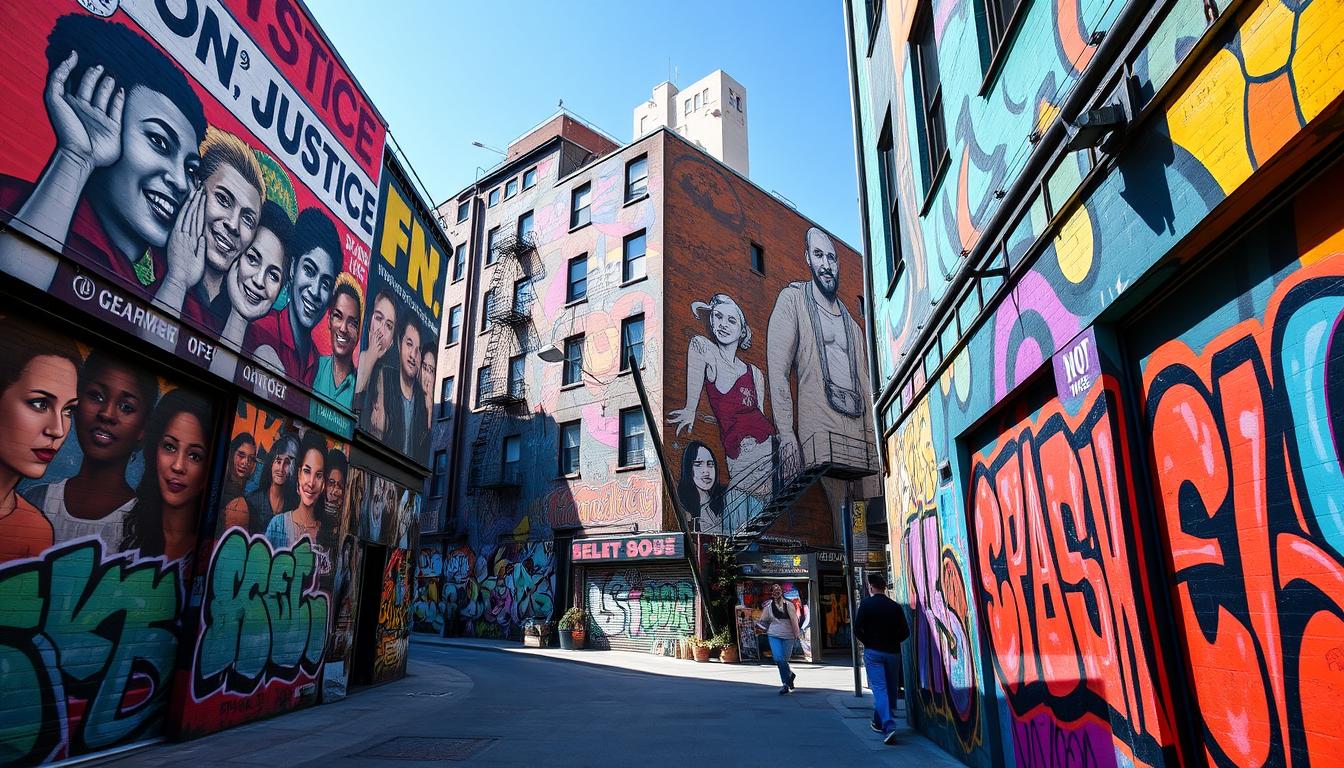
Street art has become a global phenomenon, from Mexico City’s colorful murals to London’s thought-provoking stencils. It’s a powerful way to express creativity and share social messages. Each piece tells a unique story, showcasing the rich cultures and views of the communities it represents.
In this article, we’ll take a journey around the world to explore the stories of famous street art. We’ll see how Rio de Janeiro’s murals celebrate Afro-Brazilian culture and Banksy’s work in Palestine makes political statements. We’ll dive into the history, culture, and impact of these artworks.
By learning about street art’s origins, techniques, and effects, we’ll appreciate its power to inspire and unite. Let’s uncover the stories hidden in the walls, alleys, and public spaces that showcase the world’s most striking street art.
Introduction to Street Art
Street art has become a global phenomenon, once seen as vandalism but now respected worldwide. It tells stories, comments on society, and brings communities together. You can find it in city alleys and on big building walls.
Street art is unique and open to everyone. It’s different from gallery art because it changes and reflects the city. Artists use spray cans and stencils to make dull places colorful and thought-provoking.
“Street art is a language of the streets, a visual dialogue that speaks to the heart of the city and its people.” – Jane Doe, Art Critic
Street artists have many reasons for their work. Some want to highlight important issues, while others just want to make their city prettier. Either way, street art can change public areas, making them lively and engaging.
Next, we’ll look into street art’s history, the artists who made it famous, and how it shapes cities everywhere.
The Roots of Street Art in the United States
In the 1970s, a young man named TAKI 183 started writing his name on New York City subway walls. This simple act of self-expression started a movement. Other youth from marginalized communities followed, using Aerosol art to express their presence and experiences in the city.
The growth of Graffiti and street art in the US was linked to hip-hop culture. It gave young people a creative outlet during tough times and urban decay. Neighborhood walls became canvases for art, showing the diverse views and stories of the communities.
“Graffiti writing represents the urban landscape, the walls of the city, the way people live. It’s an expression of that.” – TAKI 183
Graffiti and street art let marginalized groups take back public spaces and challenge dominant cultures. This movement changed American cities’ look and served as a strong social commentary. It gave a voice to the voiceless and highlighted urban struggles.

Today, Graffiti and urban art in the US keep evolving. A new generation of street artists is exploring new themes and styles. From the 1970s subway tags to today’s city murals, street art’s impact on US culture is clear.
Notable Street Artists to Know
The world of street art is filled with talented artists who have made a big impact. Banksy, a British artist, is known for his bold and political murals. Shepard Fairey, from the U.S., created the famous “Hope” poster of Barack Obama.
Jean-Michel Basquiat, who passed away, was a key figure in the 1980s. His art mixed graffiti, comic books, and African-American culture. Basquiat’s work tackled racism, inequality, and the human experience, making him a leader in street art.
“I don’t think about art when I’m working. I try to think about life.”
These street artists have changed the art world and popular culture. They inspire many to see public spaces as their canvas. Their work still amazes and challenges people, showing what street art can do and say.
Famous Street Art Locations
The world is full of famous street art spots, from Berlin to São Paulo. These places have become cultural landmarks and tourist hotspots. Let’s look at some of the most famous mural areas that have caught the eye of urban art fans everywhere.
In Berlin, the East Side Gallery shows the power of street art. This 1.3-kilometer part of the former Berlin Wall is covered in colorful, thought-provoking murals. Each mural tells a story of the city’s history and strength.
“The East Side Gallery is a living canvas, where artists from around the world have left their indelible mark, transforming a symbol of division into a celebration of unity and creativity.”
In São Paulo, Batman Alley is a favorite among street art fans. This alley is filled with bright murals and detailed urban art pieces. It showcases the work of both local and international artists.

Miami’s Wynwood Walls have turned a former industrial area into a lively street art district. Led by street artist Tony Goldman, this outdoor gallery is home to amazing murals. Wynwood is now a top spot for art lovers from all over.
The Intersection of Street Art and Politics
Street art has long been a way for artists to express their political views. They use public spaces to challenge authority and bring attention to important issues. Works by Banksy and Blu are examples of how street art can spark change.
Political street art often surprises people with its sudden appearance. These murals can unite communities, start conversations, and even change policies. By using public spaces, artists fight for their right to express themselves visually.
“Art is not a mirror held up to reality, but a hammer with which to shape it.” – Bertolt Brecht
Street art and politics mix in many ways, with different styles and themes. From colorful murals in Los Angeles to Banksy’s stencil art in the UK, it reaches many people. This art breaks down barriers and speaks to a wide audience.
Street art is becoming more important as we face big social and political challenges. Artists use public spaces to give a voice to the marginalized and challenge the usual stories. The connection between street art and politics is constantly evolving, shaping our communities.
Techniques and Styles in Street Art
Street art is a vibrant and changing art form. Artists use many techniques and styles to make their art. Aerosol Art is famous, where artists spray paint to make bold murals. This technique lets artists create detailed scenes that show the city’s energy.
Stencil Art is also popular. Artists use stencils to paint or ink designs on surfaces. This method helps artists quickly share their work in many places.

Wheatpasting is another technique. Artists make art on paper or fabric and stick it to walls with a wheat paste. This way, they can make big, detailed collages that change cityscapes.
“Street art is a powerful tool for self-expression and social commentary. The variety of techniques and styles employed by artists allows them to connect with diverse audiences and deliver impactful messages.” – Jane Doe, Street Art Curator
Street artists also mix different methods to make new and interesting art. For example, installation art uses objects, sculptures, and interactive parts. It creates experiences that make viewers see the city differently.
The art of street art keeps growing and changing. It draws in people and inspires new artists to make their mark.
Community Engagement Through Street Art
Street art is now a key way to engage communities. It makes urban areas lively and helps people connect. Through public art and urban art workshops, community murals empower and teach. They unite people to share their stories and values.
In cities, artists and locals team up to create stunning murals. These murals highlight the area’s history, culture, and dreams. They make the community proud and feel like they own the place. Street art sparks important talks and drives change.
“Street art has the power to transform urban spaces, giving a voice to the voiceless and bringing people together in unexpected ways.”
Community murals tackle tough issues and unite different cultures. Programs for youth use street art to express themselves. This helps young people develop their creativity and engage positively with society. It aims to make the urban art scene more inclusive and lively.
But, there’s a tricky side to public art and gentrification. Street art can make old neighborhoods shine, but it might push out long-time residents. It’s vital to keep talking and working together. Artists, leaders, and planners must ensure community murals meet the community’s needs and dreams.
The Commercialization of Street Art
Street Art has become more popular, leading to its commercialization. This change has mixed its anti-establishment roots with its acceptance in the traditional art world. Now, we see Street Art in galleries and brand collaborations, sparking debate in the Urban Art community.
The sale of Banksy’s “Girl with Balloon” at Sotheby’s in 2018 is a key example. The painting self-destructed after the sale, showing the tension between Street Art’s rebellious spirit and its growing value. This event highlighted the complex relationship between Street Art and its commercial side.
“Street Art was never meant to be sold in galleries or auctioned off to the highest bidder. It’s a public form of expression, a way for artists to connect with their community and challenge the status quo.”
Despite the debates, Street Art’s commercialization has also brought it more recognition. Collaborations with brands like Supreme and Off-White have introduced Street Art to more people. However, these partnerships also raise questions about authenticity and artistic integrity.
The future of Street Art is uncertain as it blends with the mainstream Art Market. It may find a balance between keeping its rebellious spirit and exploring commercial opportunities.
The Impact of Street Art on Local Culture
Street art is a strong way for communities to show their culture and heritage. It changes cityscapes all over the world, showing the unique stories and traditions of local people. For example, Mexico City’s vibrant murals and Berlin’s graffiti walls reflect a city’s cultural heart.
Street artists often use local styles, history, and cultural symbols in their work. This makes public spaces more beautiful and teaches people about local culture. In Oaxaca, Mexico, murals celebrate the Zapotec and Mixtec heritage. In Cape Town, South Africa, street art honors the city’s diverse communities.
Urban art also boosts cultural tourism and shapes a city’s look. Areas known for their street art attract travelers looking for real cultural experiences. This helps local businesses and artists, and builds community pride.
“Street art is a powerful medium for expressing the soul of a city. It allows us to celebrate our history, our diversity, and our aspirations as a community.”
The effect of public art on local culture is clear. Street art strengthens cultural identity, boosts tourism, and unites communities. As cities embrace this art, its influence on urban landscapes will grow.
Street Art Festivals Around the World
The world of street art has led to many exciting festivals globally. These events unite artists from different places, changing city views and sharing cultures. Notable festivals include Nuart in Stavanger, Norway, and POW! WOW! in Hawaii.
Nuart, starting in 2001, is a top spot for street art fans. It draws famous artists who make stunning murals and exhibits. Stavanger’s streets become a canvas for artistic expression, showcasing the boundless creativity of the participating artists.
POW! WOW! in Hawaii is also well-known. It began in 2010 and mixes street art, music, and community. Artists from everywhere come to Hawaii to work on big murals, making neighborhoods bright and colorful.
“POW! WOW! is not just about creating art, but also about building connections and fostering cultural exchange,” says the festival’s founder, Jasper Wong.
These festivals make cities look better and help the local economy. They attract art lovers, tourists, and locals, boosting sales and jobs. They also make street art more accepted, seeing it as a true art form.

The street art movement is growing fast, with more festivals popping up. From Nuart’s Nordic charm to POW! WOW!’s island feel, these events are winning hearts and changing city views.
Preserving Street Art
Street art is loved by people all over the world. But, saving these temporary masterpieces is a big challenge. Street Art Conservation and Urban Art Preservation are key to keeping these important works safe.
The Google Street Art Project is a great example. It uses digital tech to make a big online collection of street art from everywhere. This way, the stories and cultural value of these artworks are saved for future generations.
“Street art is a fleeting medium, and preserving it is essential to understanding the evolution of urban landscapes and the voices of the communities they represent.”
But, there’s a debate about moving street art to galleries or museums. This can protect the art, but it might break its bond with the community. Urban Art Preservation supporters say street art’s true power comes from its connection to the place and people around it.
Keeping street art alive is all about finding the right balance. We need to document, protect, and keep its connection to its surroundings. As cities and communities keep embracing street art, we’ll need new ways to save it.
Conclusion: The Future of Street Art
Street art is a vibrant form of cultural expression that keeps evolving and inspiring us. The future looks bright, with new technologies and changing cities influencing its path.
Augmented reality street art is a trend that mixes digital and physical spaces. It lets artists create immersive experiences that amaze and challenge viewers. Also, the use of eco-friendly materials shows a commitment to sustainability, fitting well with street art’s values.
Social media and digital platforms have greatly helped street art reach more people. They allow artists to connect with audiences worldwide and spark new collaborations. As cities grow, street art will cover more areas, turning urban spaces into dynamic displays of community spirit.