Africa is full of a rich cultural heritage. Traditional dances are key to this vibrant legacy. They show the beauty of Africa’s culture through their rhythms, colors, and spiritual connections.
This article will look into the roots, styles, and importance of these dances. It shows how dance unites people and celebrates Africa’s diversity.
African culture is deeply tied to dance. It’s a way to tell stories, express spirituality, and celebrate together. These dances are more than just shows. They are a living part of Africa’s history, beliefs, and traditions.
West Africa’s vibrant rhythms and East Africa’s graceful moves show the unique dance traditions of each region. Each dance reflects the cultural heritage of its people.
Dance has always been important in African society. It plays a big role in coming-of-age ceremonies, religious events, and social meetings. Through dance, African communities keep their traditions alive. They pass down knowledge and values, creating a strong sense of unity and belonging.
Uncovering the Roots of African Dance
African dance has deep roots in ancient rituals and spiritual practices. These dances were key to connecting with the divine and honoring ancestors. They also celebrated life’s rhythms.
Ancient Rituals and Spiritual Connections
Traditional African dances were a way to reach the spiritual realm. They were done during important events like rites of passage and healing rituals. Through dance, people connected with ancestors and nature’s forces.
The Role of Dance in Tribal Communities
Dance was crucial in African tribal life. It helped pass on cultural knowledge and strengthened community bonds. It was a way of life, not just entertainment. By dancing, people showed they belonged and honored their heritage.
The Culture of Movement: African Dance Styles
Africa is full of diverse dance styles, each showing off its rich culture and traditions. From the dynamic Ndombolo of the Democratic Republic of the Congo to the graceful Assiko of Cameroon, these dances are powerful ways to express art and keep culture alive.
These dance styles come from deep roots in local traditions and cultural influences. They’re not just steps; they tell the stories, experiences, and beliefs of their creators. The Zulu Indlamu’s rhythmic footwork and the Ghanaian Adowa’s fluid movements each share a unique story of Africa.
African dance is special because it brings people together from all over the world. It combines ancient rituals with modern moves, creating a global language of movement. Through dance, African cultures share their stories, honor their heritage, and welcome the world to join in their traditions.
Mastering the Rhythms: Musical Accompaniment
African traditional dances are alive with rhythmic patterns and music. At the core, drums and percussion instruments are key. They give the dances their energy and move the dancers. From the complex rhythms of the djembe to the enchanting sounds of talking drums, these instruments are crucial.
Drums and Percussion: The Heartbeat of African Dance
Drums and percussion are essential in African dance culture. Instruments like the djembe, conga, and talking drums do more than just add music. They are the heartbeat that moves the dancers, creating a powerful experience.
The complex patterns and polyrhythms from these instruments are key to the dance’s spiritual and cultural depth. They take the dance to a higher level.

Drums and percussion in African dance also carry deep symbolic meanings. Their rhythms and tones express a wide range of feelings, from joy to solemnity. They are linked to the spiritual and communal aspects of the dance.
By learning the rhythms and their cultural importance, dancers can fully connect with African dance traditions. This lets them dive deep into the rich heritage of African dance.
Symbolic Storytelling: The Meaning Behind the Moves
African traditional dances are more than just physical acts. They are powerful tools for sharing cultural stories and symbols. The detailed movements and gestures in these dances have deep meanings. They represent key cultural values, myths, and historical events. By exploring the symbolism in African dance, we learn more about the rich culture and how dance tells stories.
Dance is a key part of African culture. It helps keep oral traditions, legends, and spiritual beliefs alive. The importance of dance in African stories is huge. Every move tells a story, linking to specific characters, events, or nature, creating a rich symbolic world.
The Yoruba people in Nigeria and the Maasai in Kenya show how dance tells stories. Their dances often tell of historical events, like the arrival of colonizers or a great warrior’s victory. They can also show the cycle of life, seasons, or human connection with nature.
Learning about the symbolism in African dance helps us value these cultural expressions more. The dance moves, gestures, and postures are not just for looks. They are filled with meaning, helping to keep alive the stories and values of African societies.
Traditional Costumes and Adornments
African dance is more than just the moves and music. It’s also about the traditional costumes and adornments. These outfits are not just pretty. They carry deep cultural symbols and artistic stories.
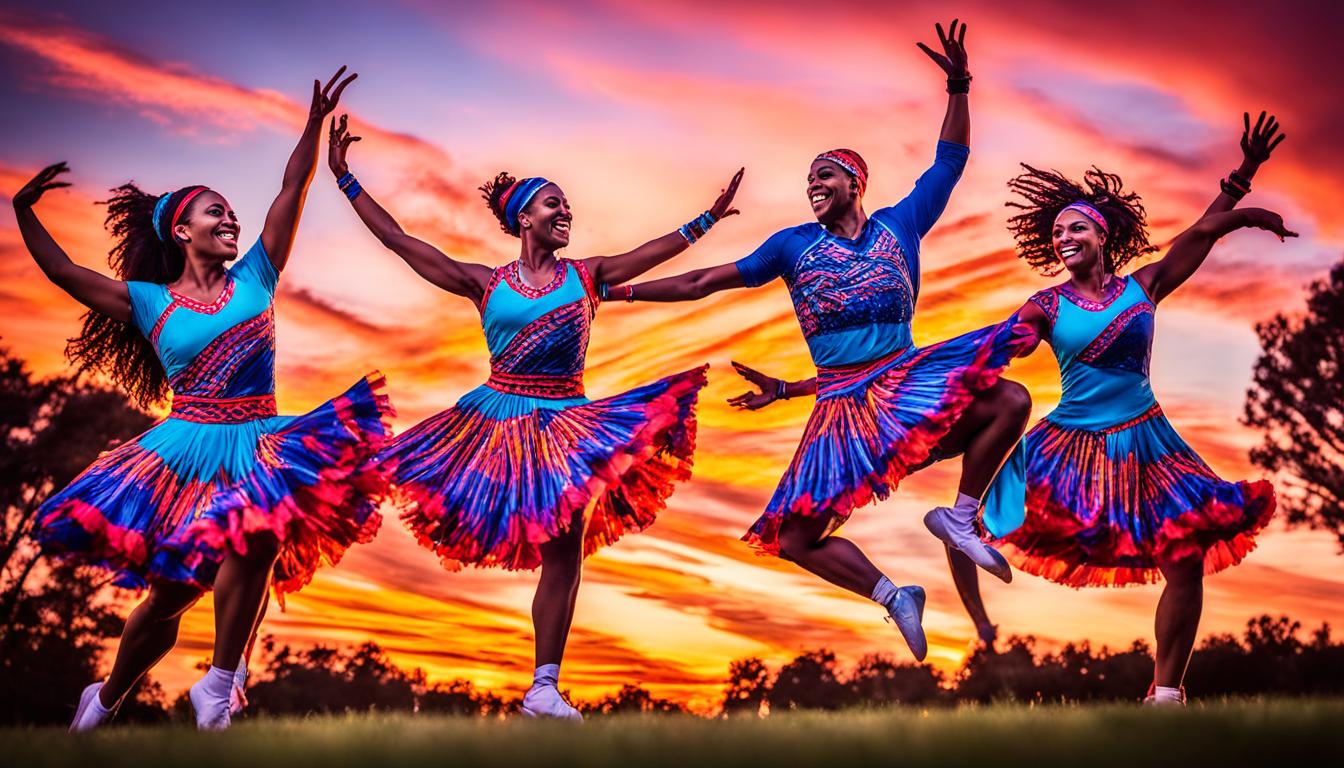
The costumes are full of vibrant colors and patterns. They show the rich cultural diversity of Africa. Each piece of the costume tells a story, sharing the beliefs and identities of the dancers.
Exploring the Vibrant Colors and Intricate Designs
The costumes are famous for their bright colors and detailed designs. They make you feel like you’re part of the culture. The patterns and colors tell stories, linking to the dancers’ traditions and beliefs.
Culture: The Essence of African Dance
African traditional dances deeply connect to the continent’s cultural identity and heritage. They are more than just physical moves. They are filled with the values, beliefs, and experiences of the communities that created them. This shows how important African dance is in keeping cultural traditions alive.
Dance is key in building community and a sense of belonging in Africa. It’s used in spiritual rituals and social events. Through dance, people connect with their heritage, which has been passed down for generations. It’s a way for everyone to celebrate their cultural roots together.
Preserving African dance traditions is vital. These dances are not just for fun; they are a living part of Africa’s cultural fabric. By keeping these dances alive, African communities keep their unique culture strong. This helps them stay connected to their heritage, even as the world changes around them.

Preserving the Legacy: Passing Down Traditions
Keeping traditional African dance alive is crucial. These dances connect us to our cultural roots. Elders and master dancers teach the next generation, keeping the dance’s spirit alive.
This way, the dance’s stories, spiritual depth, and skills are saved. It’s key for the dance’s future.
The Importance of Teaching and Learning
Teaching and learning are vital for keeping African dance traditions alive. Master dancers share their skills with the young. This keeps the dance’s heritage safe.
By teaching, dancers keep the dance’s physical moves and deep meanings alive. This way, the dance connects past and present, protecting it for the future.
As the world changes, keeping African dance traditions alive is more important. By sharing these dances with new generations, we keep our cultural heritage alive. Teachers, students, and the dance community work together to keep African dance’s legacy alive and spreading it worldwide.
African Dance in the Modern Age
African traditional dances are changing with the times, finding new ways to stay alive today. They mix modern dance styles with old movements, new music, and technology. This keeps African dance fresh while keeping its roots strong.
This mix of old and new lets African dance reach more people and affect global culture. Choreographers and performers blend ancient and modern styles. They create shows that amaze people all over the world. This mix has made African dance a lively and lasting art form that inspires and crosses borders.
African dance shows how it can change and stay relevant in today’s world. As the world connects more, African dance’s impact on global culture grows. Its rhythms, colors, and stories are now key parts of dance worldwide. This exchange keeps African dance’s heritage alive and lets it grow in the modern world.
A Celebration of Diversity: Regional Dance Variations
The African continent is full of diverse cultures. This diversity shows in the many traditional dances found across the region. From the captivating Ndebele dances of South Africa to the mesmerizing Maasai performances of Kenya, each community has its own dance traditions.
These traditions are marked by unique movements, rhythms, and cultural influences. Despite their differences, these dances share a common thread. They all help express the shared cultural heritage and identity of the African people.
The Zulu of South Africa, the Akan of Ghana, and the Yoruba of Nigeria each have their own dance styles. These styles reflect the unique traditions and customs of their communities.
This celebration of diversity shows the lasting power and resilience of traditional African dance. As these dances are passed down through generations, they remind us of the cultural richness and unity at the heart of Africa.