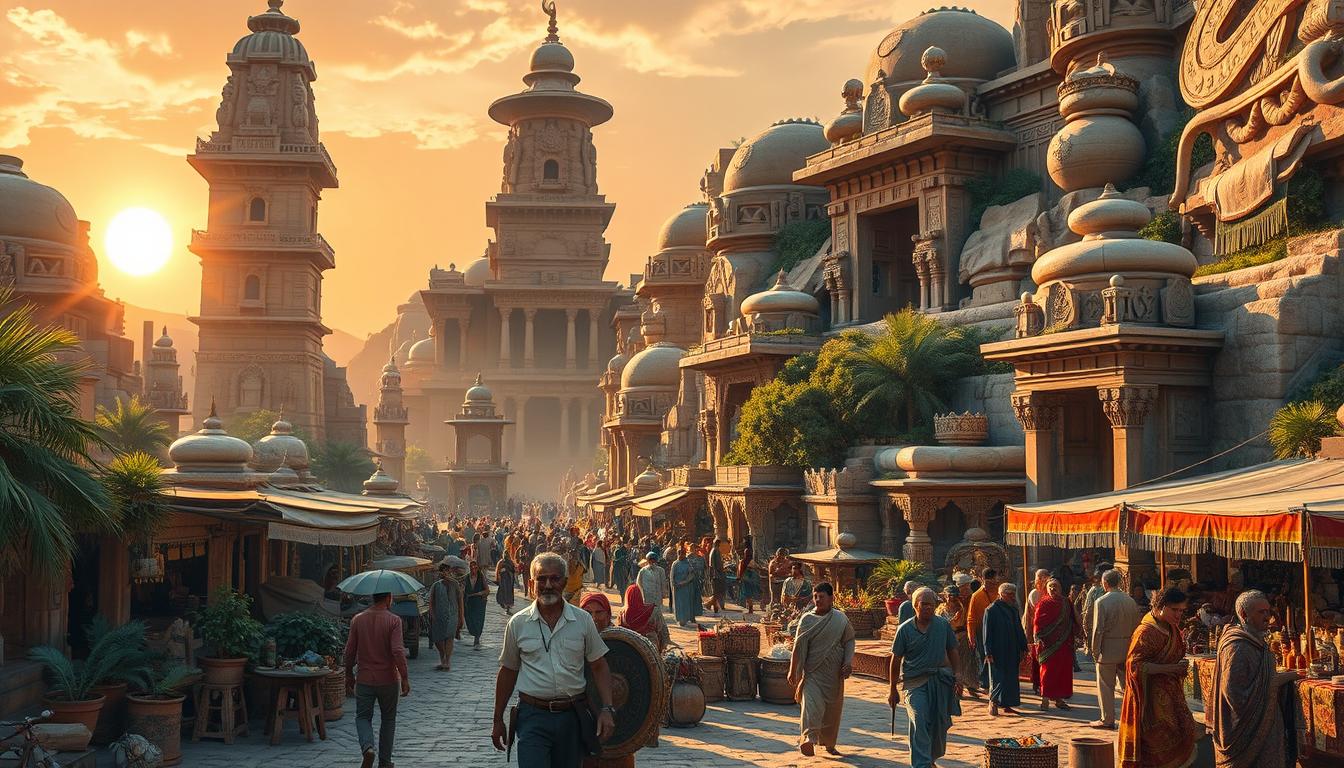
In today’s fast world, we often forget the wisdom of ancient cultures. These ancient cultures, spanning thousands of years, have survived and shaped our world. By learning from their histories, social systems, and tech, we gain insights for today and tomorrow.
The Ancient Egypt‘s stunning buildings and the Indus Valley Civilization‘s smart water systems still amaze us. Their legacies teach us about sustainability, justice, and innovation. By exploring their heritage, we find wisdom for today’s challenges.
We’re going to explore some of the world’s oldest and most impactful ancient civilizations. We’ll look at their beginnings, contributions, and lessons for today. From Mesopotamia’s cities to Ancient Greece’s ideas, each culture has a story. By learning from them, we can build a brighter future.
Overview of Ancient Civilizations
From the start of human history, ancient civilizations have made a lasting impact. They spanned the world, from Mesopotamia’s deserts to the Maya’s rainforests. We’ll look at the achievements of key cultures like Mesopotamia, the Egyptians, the Maya, and the Inca.
The Mesopotamians, known as the “Cradle of Civilization,” lived between the Tigris and Euphrates rivers, now Iraq. They started writing, math, and cities. The Egyptians, famous for pyramids and hieroglyphs, have amazed people for ages.
The Maya thrived in Mesoamerica, known for astronomy, architecture, and calendars. In South America, the Inca built roads, irrigation, and art without the wheel or writing.
“The advancement of all science, each science, connects in the end with the rest, and all sciences capture one universal science, which is Nature.”
– Novalis
These ancient cultures have greatly helped us understand human history. By studying their successes and struggles, we learn about our evolution and how humans have lived together.
Mesopotamia: The Cradle of Civilization
Mesopotamia, between the Tigris and Euphrates rivers, is a marvel. It was the birthplace of early and influential cultures. These Ancient Civilizations started writing, farming, and technology that changed human history.
The archaeological findings show Mesopotamia had Sumerian, Akkadian, Babylonian, and Assyrian empires. Each added to the world’s cultural heritage and innovation. They created cuneiform script, the wheel, and the plow.
“Mesopotamia, the land between the rivers, was the birthplace of the world’s first cities, the first empires, the first written laws, and the first schools.”
Mesopotamia’s location and fertile land made it a key trade center. It connected ancient cultures, boosting growth and prosperity. This solidified its role as the cradle of civilization.

Today, the Ancient Civilizations of Mesopotamia still fascinate us. They offer insights into human history. By exploring their achievements and cultural heritage, we learn from the past and aim for a better future.
Ancient Egypt: Beyond the Pyramids
When we think of ancient Egyptians, the pyramids are often the first thing that comes to mind. But their rich cultural heritage goes far beyond these amazing structures. They were leaders in many areas, like engineering, religion, and writing.
They left behind many ancient artifacts that show us their daily lives, beliefs, and skills. These include jewelry, pottery, tombs, and temples. Their engineering skills are seen in their monuments, which still amaze and inspire us today.
“The history of the Egyptians is the history of the world.”
The Egyptians’ religious beliefs were a big part of their lives. They believed in many gods and goddesses and thought about the afterlife. This is shown in their unique writing system, which is a mix of pictures and sounds.
Exploring the ancient Egyptians’ world shows us a society that was more than just pyramids. They were a complex and advanced society that greatly influenced human culture. Their work in science, engineering, and the arts still inspires us today, leaving a lasting legacy of wonder.
The Indus Valley Civilization: A Mystery
The Indus Valley Civilization is a true enigma among ancient civilizations. It thrived in what is now Pakistan and northwestern India. Its advanced urban planning and drainage systems show the ingenuity of its people.
The script of the Indus Valley Civilization remains a mystery. Despite much research, the meaning of these symbols is still unknown. This has sparked a deep interest in the lost cities and ancient civilizations of the region.
“The Indus Valley Civilization is a testament to the remarkable achievements of our ancestors, and its unanswered questions continue to drive us to uncover the secrets of the past.”
Many theories exist about why this civilization declined. Some point to environmental changes or the arrival of new populations. Scholars also explore links between the Indus Valley Civilization and later Indian cultures, suggesting a rich history of cultural exchange.
Exploring the archaeology of the Indus Valley opens up a world of possibilities. We learn about its advanced urban planning and the enigmatic symbols that have yet to be decoded. The mysteries of this ancient civilization continue to captivate and challenge us, driving us to unravel the threads of our shared human history.
Ancient China: The Middle Kingdom
Exploring ancient civilizations, Ancient China stands out as the “Middle Kingdom.” It has a history spanning thousands of years. This culture has deeply influenced East Asian societies.
Ancient China made major breakthroughs like papermaking and gunpowder. Its philosophical ideas have shaped the world. The culture’s political and social structure still impacts the region today.
At the core of Ancient Chinese culture are its philosophical traditions. Confucius’ teachings on social harmony and family values are key. Lao Tzu’s Taoism offers insights into the natural world and balance.
“The essence of Chinese philosophy is to cultivate morality, achieve social harmony, and live in accordance with the Tao.”
Exploring Ancient China’s legacy is fascinating. Its technological and philosophical achievements continue to influence our world. Ancient China’s impact on culture is still felt today.
The Mesoamerican Cultures: A Tapestry of Nations
Mesoamerica, from central Mexico to Central America, was home to many ancient civilizations. The Maya, Inca, and others made huge impacts on the world. Their work in archaeology, astronomy, and architecture still amazes us today.
The Maya were known for their city-states and advanced calendars. They were great at math and building. Their temples, like Chichen Itza, show their skill and culture.
The Inca civilization stretched across the Andes. They built roads, irrigation systems, and amazing buildings like Machu Picchu. It’s a lost city that fascinates archaeologists and adventurers.
But Mesoamerica had more than just the Maya and Inca. The Olmec were the “mother culture” of Mesoamerica. They started writing, calendars, and sculptures. The Aztec built a big empire that the Spanish conquistadors later conquered.
“The richness and complexity of Mesoamerican cultures continue to captivate scholars and the public alike, as we unravel the mysteries of their lost cities and unlock the secrets of their remarkable achievements.”
The legacy of Mesoamerican cultures is fascinating. Archaeologists and researchers keep finding new things about these societies. The Mesoamerican cultures show how smart and strong the human spirit can be.

The Influence of Ancient Greece on Modern Society
The ancient Greek civilization has made a lasting impact on our world. It has shaped democracy, philosophy, literature, and the arts. Today, the legacy of Ancient Civilizations influences thought and culture globally.
The Greek idea of democracy has sparked democratic movements everywhere. The Athenian model, with its focus on citizen involvement and law, set the stage for today’s democracies. Ancient Greek philosophy, from Socrates to Aristotle, still guides our views on humanity and our role in cultural heritage and ancient history.
“The Greeks planted the seeds of Western civilization. Now it remains for us to build upon the heritage they have left us, to develop the full potentialities of human nature.”
Ancient Greek literature and art also left a mark. Homer’s epics, Sophocles’ tragedies, and Phidias’ sculptures still move and inspire us. These works are key to the Western artistic tradition.
Looking ahead, ancient Greece’s wisdom is still vital. By learning from these Ancient Civilizations, we can advance human progress and connect through our shared cultural heritage.
The Roman Empire: Lessons in Governance
The Roman Empire was a remarkable civilization that left a lasting impact on the world. It offers valuable lessons in governance that are still relevant today. The Roman Empire’s systems of law, infrastructure, and political structures have greatly influenced modern societies.
The Roman Empire was known for its well-organized bureaucracy at its peak. This allowed it to efficiently manage its vast territories. Their commitment to the rule of law, shown in their detailed legal code, helped shape modern legal systems. Their engineering skills, seen in their roads, aqueducts, and public works, still inspire today’s infrastructure projects.
“The fate of ancient civilizations is a cautionary tale, reminding us that even the mightiest empires can fall if they fail to adapt to changing circumstances.”
The Roman Empire’s rise and fall teach us about the fragility of power and the need for adaptability. Its expansion, political instability, and economic troubles led to its downfall. This shows that even the most powerful ancient history can face change.

By studying the Roman Empire, today’s leaders can learn about effective governance and the importance of foresight. They can also see the need to balance ambition with caution. The Roman Empire’s lessons continue to guide us, helping us navigate today’s complexities and preserve our shared cultural heritage.
The Role of Religion in Ancient Civilizations
The ancient world was deeply shaped by religion. In many ancient civilizations, religious beliefs and practices greatly influenced art, architecture, and social norms. The pyramids of Ancient Egypt and the temples of Ancient China show the strong impact of religion.
Religion was a unifying force, creating a shared identity. It was part of daily life, guiding everything from farming to important life events. The history of these civilizations is closely tied to their religious traditions.
The relationship between religion and power was complex. Sometimes, religious leaders had a lot of political power. Other times, the state tried to control religious practices. This mix of the sacred and secular helps us understand ancient societies.
“Religion is the sigh of the oppressed creature, the heart of a heartless world, and the soul of soulless conditions. It is the opium of the people.”
When we look at ancient civilizations, religion is key. It helps us understand their lasting impact and how their beliefs still influence us today.
Trade Routes and Their Impact on Ancient Cultures
The ancient world was a vast, interconnected tapestry. It was woven together by trade routes that spanned continents and civilizations. These ancient trade routes were key in shaping the cultural heritage and economic growth of ancient civilizations.
The Silk Road was a famous trade network. It connected the ancient history of China, the Middle East, and Europe. It allowed for the exchange of goods, ideas, and innovations, spreading cultural heritage far and wide.
“The Silk Road was not just a trade route, but a cultural highway that transformed the world.”
Maritime trade routes in the Indian Ocean and the Mediterranean also played a big role. They helped shape the economic and social lives of ancient civilizations. The exchange of goods like spices and textiles drove prosperity and cultural exchange.

The effects of these trade networks went beyond commerce. They influenced the growth of ancient civilizations deeply. The cultural heritage of these societies was enriched by diverse traditions. This created a vibrant, multifaceted global tapestry that still inspires us today.
Modern Lessons from Ancient Civilizations
Exploring Ancient Civilizations reveals a wealth of knowledge for today’s world. We see how the Mesopotamians managed resources and the Indus Valley planned cities. These ancient lessons are key to solving today’s global problems.
The wisdom of old societies teaches us about caring for the environment, building strong communities, and good leadership. For example, the Egyptians’ water systems can help us tackle water shortages. The Mayans’ community living shows us how to stay connected in today’s cities.
“The more we learn about the ancient history of our world, the more we realize how much we can still learn from our ancestors.”
By examining ancient successes and failures, we find timeless wisdom. This wisdom can lead us to a better, more sustainable future. It helps us find new ways to solve today’s big problems.
In today’s complex world, looking back at our shared history is vital. By learning from our ancestors, we can build a stronger, fairer, and greener future.
Preserving Ancient Wisdom in the Contemporary World
In today’s world, the wisdom from ancient times is more important than ever. Archaeologists, historians, and experts in cultural preservation are working hard. They aim to uncover, study, and protect the valuable artifacts and knowledge from our past.
Museums like the Smithsonian Institution and the British Museum are key players. They have huge collections and host exciting exhibitions. These museums help us appreciate the values and innovations from ancient times.
Technology is also helping to share ancient knowledge. Digital archives, virtual tours, and educational platforms let people around the world learn about ancient cultures. This helps us understand our shared humanity. As we face today’s challenges, the wisdom of the past guides us towards a better future.