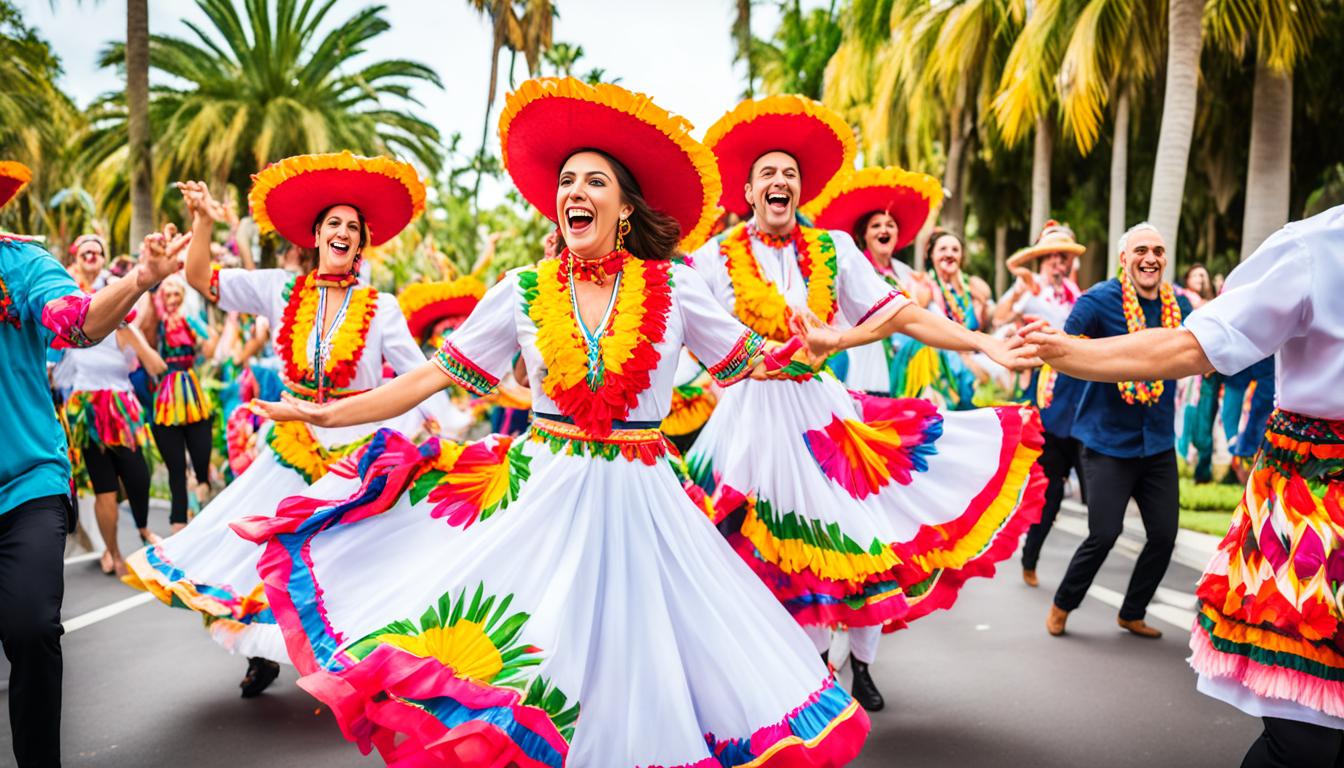
Latin America is known for its lively music and dance. From salsa and samba to tango and mariachi, these traditions show the region’s unique culture. This article will look into the origins and growth of these musical and dance styles. It will highlight the energy and importance they have gained worldwide.
Music and dance in Latin America come from a deep history. They mix indigenous, European, and African influences. This mix creates a rich cultural scene. Whether it’s the rhythm of Latin culture or the Brazilian samba, these art forms express the region’s identity. They are loved and recognized all over the world.
The Rhythmic Heartbeat of Latin Culture
The music and dance of Latin America are deeply rooted in its rich culture. From the pre-Columbian indigenous civilizations to European colonization, the region’s music shows the blending of cultures. This mix of sounds and movements is the heartbeat of Latin culture.
Uncovering the Rich Musical Traditions of the Region
Before European colonists arrived, the indigenous peoples of Latin America had their own music. The Aztecs, Incas, and Mayans used drums and wind instruments in their music. These sounds laid the groundwork for the unique music of the region.
The Fusion of Indigenous and European Influences
European instruments and music changed Latin American music during colonization. This mix of indigenous and European sounds created a new kind of music. This blend of cultures is what makes Latin American music so unique and loved around the world.
Salsa: The Dance that Captivates the World
Salsa is a lively dance that has won hearts all over the globe. It started in New York City and Puerto Rico in the 1960s and 1970s. This dance combines styles like Cuban son, mambo, and cha-cha-cha.
This dance is known for its unique hip moves, complex footwork, and lively partner dancing. It’s a key part of Latin dance culture.
The dance began in cities with large immigrant communities. It showed off the area’s rich culture and vibrant life. As salsa became more popular, it spread far and wide, drawing in dancers and fans from everywhere.
Now, salsa is one of the most loved Latin dances. Its catchy tunes and lively steps have made it popular across the world.
Over time, different regions have added their own twist to salsa. You can find everything from the smooth Cali style to the energetic New York style. This shows how diverse and rich Latin dance culture is.
The Pulsating Sounds of Brazilian Samba
Brazil’s culture is alive with the rhythm of samba music and dance. This vibrant form came from Afro-Brazilian communities in Rio de Janeiro. It combines drumming, singing, and dance with a rich history.
Enslaved Africans brought their musical traditions to Brazil. They mixed these with European and indigenous sounds. This created the unique sound of samba.
The Carnival in Brazil shows how powerful samba is. Millions join the streets to dance to its beats and enjoy the colorful costumes. It’s a time when people from all backgrounds come together.
They celebrate their Afro-Brazilian culture and the rhythm and dance at its heart.
Tracing the Origins of the Carnival Celebrations
The Carnival in Brazil has deep roots in Afro-Brazilian culture. It started in the 18th century with enslaved Africans bringing their celebrations to Brazil. Over time, it grew, blending European and indigenous traditions.
Samba’s rhythm and dance are the heart of Carnival. They bring energy and celebrate Afro-Brazilian culture. Carnival is Brazil’s biggest cultural event, showing samba’s lasting impact. It unites Brazilians and people worldwide.
Tango: The Passionate Dance of Argentina
Tango, a dance that has won hearts globally, is a big part of Argentina’s culture. It started in the late 1800s in Buenos Aires’ working-class areas. This passionate dance came from mixing European and African influences. It shows the diverse heritage of Argentina.
The Argentinian tango is known for its complex steps, close embrace, and dramatic moves. It’s a dance that challenges both those who do it and those who watch. Over time, it has changed with society and trends but kept its unique style.
Mastering the Intricate Steps and Movements
Learning the Argentinian tango takes a lot of practice and love for the dance. It has special steps like the elegant cross-step and dramatic pauses. These steps need perfect timing and a deep emotional bond between partners.
Dancers must know how their body moves and how to lead and follow. This creates a beautiful show of cultural identity and passionate dance.
The Argentinian tango shows how dance can bring people together across cultures. It continues to enchant people everywhere. It’s a symbol of Argentina’s rich culture and the lasting charm of the passionate dance.
Culture: The Vibrant Tapestry of Latin American Music and Dance
The music and dance of Latin America show more than just art. They reflect the region’s rich culture and lasting heritage. From salsa and samba to tango and mariachi, these arts are key to Latin American life. They help people connect, express culture, and show the world their strength and flexibility.
Latin American music and dance mix indigenous, European, and African influences. This blend has made these arts a big part of Latin American culture. They’ve also won fans worldwide with their catchy tunes and beautiful moves.
In places like Cuba and Brazil, Latin American music and dance are big parts of the culture. They show the people’s strength, ability to adapt, and deep spirit. These arts express their shared identity and connect local traditions with the world.
The Infectious Rhythms of Merengue and Bachata
The Dominican Republic has made a big mark on Latin America’s music scene. It has won the world over with the catchy beats of merengue and bachata. These genres are not just a source of pride for the Dominican people. They have also become loved by people all over the world.
Merengue is a lively dance music known for its unique two-step rhythm and the sound of accordions. It’s a favorite in Latin America and beyond. Its lively beats and joyful vibe make people want to dance. This has helped share the rich culture of the Dominican Republic and its Caribbean roots.
Exploring the Dominican Republic’s Musical Legacy
Bachata, a music style driven by guitars from the Dominican countryside, has also become popular worldwide. Its touching lyrics and dance moves have won the hearts of music fans everywhere. Bachata shows the lasting impact of merengue and bachata music. The Dominican Republic’s music keeps inspiring artists everywhere, making it a key player in Latin American music and dance.
Mariachi: The Spirit of Mexican Folk Music
Mariachi music is a key part of Mexican culture, deeply tied to the country’s folk traditions. It features violins, trumpets, guitars, and heartfelt vocals. This music style started in the 19th century in western Mexico’s rural areas.
Its lively rhythms and happy tunes have made mariachi a symbol of Mexican pride. People all over the world love its timeless charm.
Mariachi music connects deeply with Mexico’s land and people. It mixes different cultural influences, creating a unique sound. From serenades under the moon to lively fiestas, mariachi is a big part of Mexican life.

Mariachi music is known worldwide for its ability to bring people together. Its beautiful harmonies, amazing solos, and moving vocals touch the hearts of everyone. It’s a beloved symbol of Mexican heritage, connecting people across the globe.
Latin Jazz: A Fusion of Cultures and Genres
Latin jazz is a genre that blends Latin American rhythms with jazz’s improvisational spirit. Icons like Tito Puente, Dizzy Gillespie, and Chucho Valdés led the way. Their work has created a sound that reaches people all over the world.
At its core, Latin jazz mixes Latin rhythms with jazz’s improvisation. This blend has made a unique sound. It honors the cultural mix at the heart of Latin American music.
Exploring the Innovative Sounds of Latin Jazz Masters
Tito Puente’s timbal and Dizzy Gillespie’s melodies have shaped Latin jazz. Chucho Valdés, a renowned Cuban pianist, has also played a big role. He combines traditional rhythms with modern jazz, creating something new.
Latin jazz has gained fans all over the globe. Its rhythms and improvisations have won hearts everywhere. This music shows the beauty of Latin American culture and the strength of creative collaboration.
The Role of Music and Dance in Latin American Society
Music and dance are key parts of Latin American culture. They do more than just entertain. They help keep traditional practices alive, build community identity, and share the region’s rich heritage. From Carnival celebrations to private gatherings, these arts bring people together, creating a strong cultural bond.
Latin American music and dance mean more than just performances. They give power to marginalized communities, letting them celebrate their heritage and identity. The lively rhythms and captivating moves bring people together, crossing language and geography lines.
Latin Americans keep their music and dance traditions alive. They pass down skills and knowledge, making sure these arts keep evolving. This keeps the region’s unique culture safe and strengthens community ties.
The Global Influence of Latin American Music and Dance
The rhythms and dance styles of Latin America have reached far beyond their borders. They have won over fans and shaped cultures worldwide. From salsa hits topping charts to tango performances on big stages, these arts speak a universal language. They help people from different cultures come together and share.

Latin American music and dance keep inspiring artists and fans everywhere. They show the strength of cultural diversity and the lasting impact of this vibrant region. The mix of indigenous and European influences has created a rich mix of music and dance traditions. These traditions, from Brazilian samba to Argentine tango, have won the world over.
Through sharing these arts, Latin American music and dance bring people together. They help bridge cultural gaps and increase respect for the region’s heritage. As more people around the world fall in love with these arts, their influence will keep growing. They will continue to enrich our culture and inspire new artists and fans.
Preserving and Celebrating the Future of Latin American Music and Dance
Latin American music and dance are spreading their joy across the globe. It’s important to keep these traditions alive for future generations. By teaching and sharing these arts, we can keep their spirit going strong.
Learning about Latin American music and dance helps us understand different cultures. It also brings people together, celebrating the diversity of Latin American culture. Communities are key in keeping these traditions alive and making them fit today’s world.
The future of Latin American music and dance is up to us. We need to teach the next generation about their value. With education and support from cultural groups, these traditions will continue to grow and touch lives worldwide.