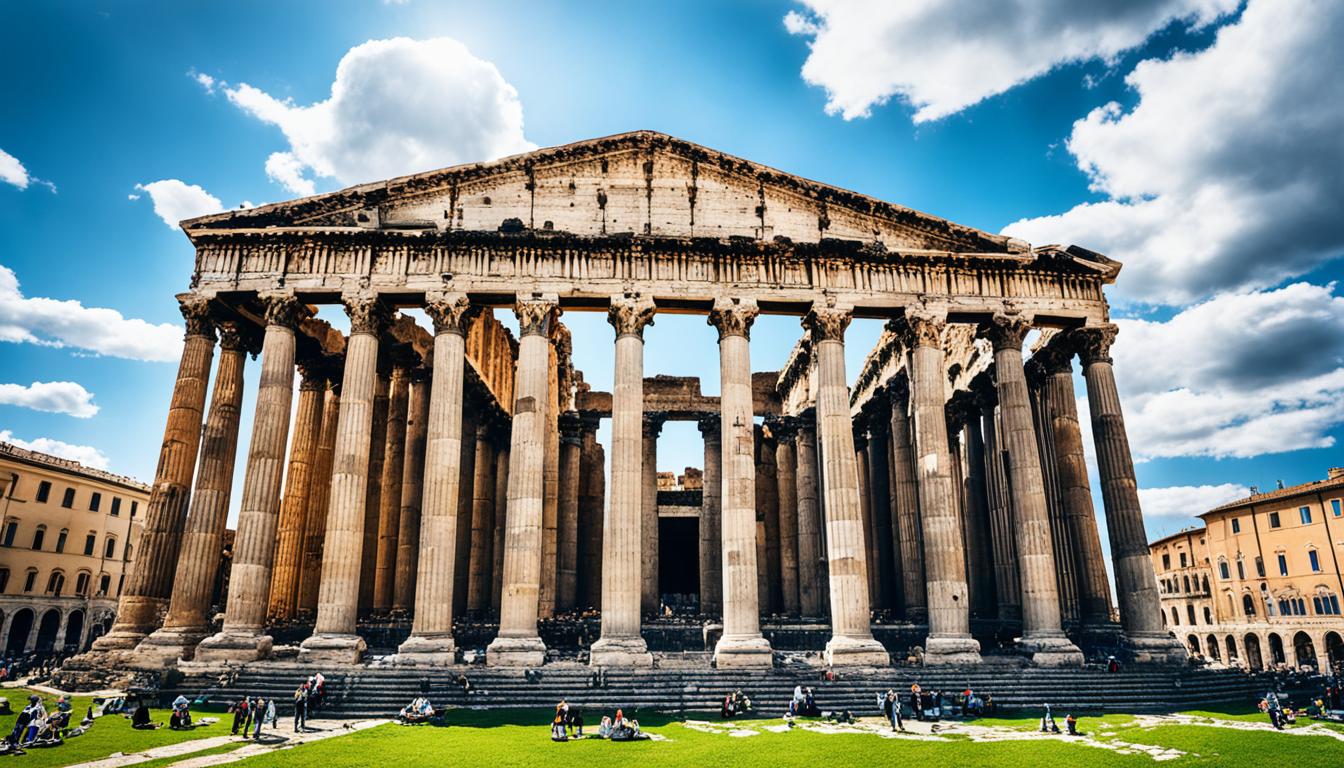
The architecture of ancient Rome shows the genius and culture of this famous civilization. It includes grand public buildings and new engineering ideas. These wonders still amaze and inspire people all over the world.
This guide looks at the many ways Roman architecture changed history. It shows how Roman culture and new technology led to iconic structures. These structures are still standing today.
Roman architecture is full of cultural influence. It mixed Greek design with new engineering ideas. The Romans were great builders, using concrete, brick, and stone for their buildings.
These buildings tell us about the daily life and dreams of ancient Rome. They range from big public buildings to small homes. They give us a peek into the lives of people back then.
Exploring the Enduring Legacy of Roman Architecture
Roman architecture is famous for its grandeur and lasting impact on buildings. It combines Greek design and Roman engineering skills. This mix created a style that still inspires architects today.
The Influence of Greek Architectural Principles
The Romans took a lot from Greek architecture. They used Greek ideas of symmetry, proportion, and balance in their designs. You can see this in the columns and details of their buildings.
But they didn’t just copy Greek styles. They made their own unique style by adding to Greek designs.
Innovative Engineering Techniques and Materials
Roman architecture was also about new engineering and materials. They used concrete to build big structures. This let them make buildings that were bigger and more complex.
They also used arches, vaults, and domes. These helped them build famous buildings like the Colosseum and the Pantheon. These buildings have lasted for centuries.
Romans mixed Greek designs with their own engineering to create a unique style. Their work still inspires architects and historians today. It shows how architecture has evolved and the creativity of humans.
The Grandeur of Roman Public Buildings
The ancient Romans were famous for their grand public architecture. They built structures that were key to civic, commercial, and religious life. At the center of these buildings were the basilicas. These were huge structures with tall columns and high ceilings that stood out in the city.
These basilicas were not just beautiful. They were important for administration, trade, and community events. They were placed in the middle of Roman cities. This made them key spots for public activities and community pride.
Basilicas: Centers of Civic and Commercial Life
The Roman basilicas were more than just beautiful buildings. They were the heart of Roman cities. People went there to do business, go to court, and join community events. These buildings were key to Roman society, linking different parts of the city together.

The size and design of these buildings showed the Romans’ focus on both beauty and function. They used their architecture to create a sense of unity and identity in their cities. This shaped the way people lived in the ancient world.
The Pantheon: A Marvel of Roman Engineering
The Pantheon is a symbol of ancient Roman engineering skill. It has a huge, domed roof and complex construction methods. These show the amazing innovations in Roman architecture. The design combines Greek architecture with the Romans’ engineering skills.
The Pantheon uses concrete, a material the Romans developed and refined. The dome’s design, with its coffered structure, looks great and is very strong. The dome is huge, 142 feet wide, showing the Romans’ skill in building big structures.
The Pantheon’s design is smart about using natural light. A big hole at the top lets in light and shadow, making the inside look amazing. This design is useful and adds to the Pantheon’s spiritual and symbolic meaning.
The Pantheon has lasted for centuries, showing the Romans’ dedication to building and engineering. It still amazes people today, proving the Romans were true masters of their craft.
Roman Aqueducts: Marvels of Ancient Hydraulic Engineering
The ancient Romans were known for their amazing architecture and engineering skills. Building aqueducts was a key part of their work. These structures carried water over long distances, meeting the needs of big cities. They also showed the Romans’ creative approach to building.
Innovative Techniques for Water Transportation
The Romans used new methods to move water through their aqueducts. They used gravity and arches to make sure the water flowed well. These aqueducts, some still working today, carried a lot of water. They supplied water for baths, fountains, and homes in Roman cities.

Building these aqueducts was a huge engineering challenge. The Romans had to figure out steep slopes and rough terrain. Their skills in math, surveying, and using materials like concrete and stone were key. Their hard work created a water system that changed city life in the ancient world.
The Colosseum: An Architectural Masterpiece
The Roman Colosseum is a symbol of ancient Roman ingenuity and grandeur. It’s one of the most famous ancient structures still standing. Built in the 1st century AD, it amazed people with its design and showed off Roman culture.
A Glimpse into Ancient Roman Culture
The Colosseum was more than just a building. It was the heart of Roman entertainment. Here, people enjoyed gladiator fights, animal shows, and theater. It showed the Romans’ love for the arts and their desire to impress.
The Colosseum’s design was a work of art. It used advanced engineering to blend different areas for shows and spectators. Today, it still amazes people, reminding us of ancient Roman culture and innovation.
Triumphal Arches: Celebrating Roman Victories
The Roman triumphal arches are huge and full of detail. They show off the ancient Roman Empire’s military strength and building skills. These big structures were built to honor Rome’s famous legions and their victories as they spread across the Mediterranean.
These arches are covered in beautiful carvings, reliefs, and writings. They were more than just buildings; they were a way to show off Rome’s military wins. Victorious generals and their troops would pass through these arches in big parades, showing off their victories.
The triumphal arches also show off Roman engineering and design skills. They were made with strong materials like stone and marble and built to last. This made them lasting symbols of Roman building skills.
When you look into ancient Rome’s history and culture, the triumphal arches are a big part of it. They show the empire’s military strength, building skills, and lasting symbols. These famous structures still amaze and inspire people today, giving us a peek into the Roman civilization’s glory days.
Domestic Architecture: Glimpses into Roman Daily Life
The Romans are famous for their big public buildings. But their homes give us a peek into their everyday lives. Roman villas, the fancy homes of the elite, tell us a lot about their culture and way of life.
The Layout and Design of Roman Villas
Roman villas were made to meet the needs of their owners. They showed the Romans’ love for comfort, usefulness, and beauty. These designs were often inspired by Greek architecture, blending practicality with elegance.
The atrium, a big open courtyard, was at the heart of the villa. It was a place for socializing and got lots of natural light. Around it, there were rooms for sleeping, eating, and entertaining, each with its own special design.
Roman homes also had luxury touches like mosaic floors, frescoed walls, and beautiful gardens. These showed the wealth and status of their owners. They also highlighted the Romans’ love for beauty and their aim to make their homes comfortable and nice to look at.
Culture: The Essence of Roman Architecture
The architecture of ancient Rome showed off the empire’s rich culture. It mixed Greek design with new engineering ideas. This made Roman architecture a sign of the Romans’ creativity and big dreams.
Buildings like the Pantheon, Colosseum, and aqueducts were more than just useful. They were symbols of Roman identity, values, and skills.
Greek styles influenced many Roman buildings. They used columns, pediments, and other classic elements to make buildings look grand and sophisticated. At the same time, Roman engineers came up with new ways to build, like better water transport and stronger structures.
Roman architecture still amazes people today. It shows how human creativity and the values of the Roman Empire last. The Colosseum’s grandeur and the Pantheon’s beauty show the deep culture of ancient Rome.