In New Zealand’s stunning landscapes, the Maori people keep alive a rich culture that has won the world’s admiration. They are the original people of the island, mixing their ancient heritage with the island’s beauty. Their traditions show a world that is both old and always changing.
This article takes you on a deep dive into Maori culture. We’ll look at their beginnings, beliefs, arts, and customs. By exploring their heritage, we’ll see how the Maori shape New Zealand’s identity and influence the world.
The Maori: An Introduction
The Maori, New Zealand’s indigenous people, have a long and interesting history. They came from the islands of Polynesia, seeking new lands. They settled in Aotearoa, now known as New Zealand, in the beautiful landscapes.
Origins and Ancestry
The Maori trace their roots back to the Lapita people, a seafaring culture from Southeast Asia. Over time, they developed their own language, customs, and way of life. This shows their resilience and ability to keep their culture alive through history.
Geographical Distribution
The Maori live all over New Zealand, mainly on the North and South Islands. They have a deep bond with the land, shown in their traditions and beliefs. They respect the natural world, from the Southern Alps to the coastlines.
The Maori are crucial to New Zealand’s history and culture. Their traditions, language, and lifestyle are still celebrated and respected. They are a key part of the nation’s identity.
Maori Beliefs and Spirituality
The Maori people have a deep system of beliefs and spirituality tied to their heritage. They hold a strong respect for nature and a bond with the land. They see every living thing, from mountains to animals, as having a spiritual essence called “mauri”.
At the core of Maori spirituality is “whakapapa”, which means the connection of all things. It also represents the unbroken line of ancestry linking the Maori to their past, present, and future. This belief influences many parts of Maori culture, from their traditions to their art.
Maori religion is full of beliefs and practices. They honor ancestral spirits called “atua” and use rituals and symbols to connect with the spiritual world. Ceremonies and rituals are key in Maori spiritual life. Events like the “whare wānanga” and “hui” are important for sharing cultural knowledge and strengthening community bonds.
Traditional Arts and Crafts
The Maori people of New Zealand have a rich artistic tradition. It’s deeply rooted in their cultural heritage. They create intricate wood carvings and weave with great skill. These arts express their spiritual beliefs, history, and identity.
Traditional Maori arts and crafts are key to their culture and stories. They keep these practices alive today.
Maori Wood Carving
Wood carving is very important in Maori culture. Artists make detailed designs and figures for important places like meeting houses and canoes. These carvings tell stories of Maori legends and ancestral figures.
They also show abstract patterns with deep meanings. Carving wood is a skilled job. It requires technical skill and a deep knowledge of Maori stories and spirituality.
Maori Weaving
Weaving is another vital part of Maori arts. Weavers make many items, like clothes, baskets, and wall hangings. These items often tell important stories and show the Maori’s bond with nature.
Maori weaving skills have been passed down for generations. These weavers are true artists, showing great skill and creativity.
Maori wood carving and weaving show the lasting art and culture of the Maori people. They help keep their unique identity and traditions alive.
Culture and Storytelling
Maori culture is deeply rooted in storytelling and oral history. These traditions have kept cultural knowledge, histories, and values alive. Through stories of Maori legends and myths, their heritage stays alive and vibrant.
Oral Traditions
Storytelling is key to the Maori identity, linking past and present. Elders are seen as guardians of these stories, sharing tales that shaped their civilization. These stories are more than just tales; they’re the heart of Maori beliefs and their bond with the land.
Maori traditions go beyond just stories. They include chants, songs, and poetry called waiata. These forms honor important events, share history, and celebrate being Maori. By sharing these traditions, the Maori people keep their culture alive for future generations.

Maori Mythology and Legends
Maori mythology and legends give us a peek into the deep culture of New Zealand’s indigenous people. These stories, passed down through generations, shape their worldview and bond with nature.
The story of Māui, a demi-god, is a key Maori legend. He’s said to have pulled up the North Island, known as Te Ika-a-Māui (the fish of Māui). This tale explains the island’s shape and shows the Maori’s deep respect for nature and its forces.
Another famous story is about Ranginui, the sky father, and Papatūānuku, the earth mother. They were once together, but their children, the gods, pushed them apart. This created our world. It shows the Maori’s view of the universe, where everything in nature is connected and important.
Looking into Maori mythology and legends lets us see their rich culture, deep spirituality, and respect for nature. These stories still inspire and amaze people worldwide. They keep the Maori’s unique identity and heritage alive for future generations.
Maori Performing Arts
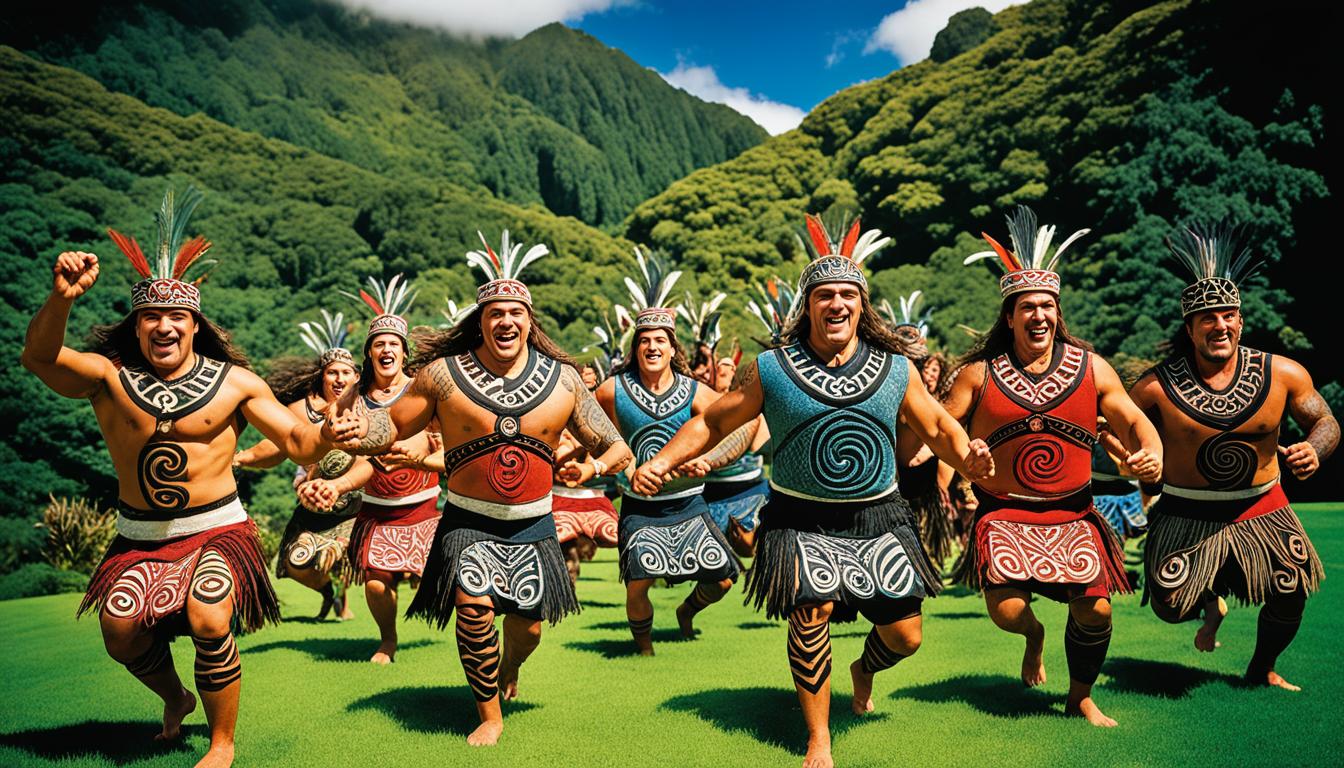
The Maori people of New Zealand have a rich cultural heritage. Their performing arts show their vibrant traditions. At the center are the powerful Maori haka and the soulful Maori waiata.
Haka: A Captivating Ceremonial Dance
The Maori haka is a dance that shows the strength and unity of the Maori people. It has loud chants, strong body movements, and intense looks. This dance is a powerful way to welcome guests, mark important events, or show respect.
Waiata: The Soulful Maori Songs
Maori waiata, or songs, are another big part of Maori culture. They express feelings, tell stories, and share cultural knowledge. These songs can be deep chants or lively tunes. They show the wide range of Maori artistic expression.
Maori Cuisine and Culinary Traditions
Maori cuisine is full of flavors, thanks to New Zealand’s indigenous people. It shows their creativity and resourcefulness. Traditional cooking methods and important ingredients highlight the culture’s depth.
The Maori have passed down unique cooking techniques for generations. The hangi, a traditional earth oven, is a key example. Food is cooked in a pit with hot stones, covered with leaves and soil. This method makes the food smoky and tender, full of the land’s essence.
They also use flax baskets and wooden utensils. This shows their strong bond with nature.

Ingredients like kumara (sweet potato), seafood, and wild greens are key to Maori cooking. They are locally sourced and have deep cultural meaning. They connect people to the land and ancestors.
Food is central to Maori gatherings and celebrations. Sharing meals strengthens community ties and honors past traditions.
Maori cuisine is a feast for the senses. It combines the land’s flavors with the wisdom of past generations. As the world discovers indigenous cooking, the Maori share their unique food culture with us.
Language and Culture
At the heart of Maori identity is the language, Te Reo Maori. It’s more than just a way to talk; it’s a key part of the Maori culture. By keeping the Maori language alive, we protect the rich culture of this indigenous people for the future.
Te Reo Maori
Te Reo Maori is a Polynesian language that has been around for centuries. It’s full of tradition and gives a deep look into Maori customs and beliefs. This language is a living part of Maori culture, not just a set of words.
The Maori community knows how important it is to keep their language going. They’re working hard to teach and use Te Reo Maori in schools, events, and media. This keeps their language strong and connects them to their ancestors.
The Maori language is still changing but stays key to their identity. By keeping Te Reo Maori alive, the Maori people protect their language and traditions. This ensures their culture, customs, and views continue for the future.
Contemporary Maori Culture
The Maori culture in New Zealand has changed a lot over time. It has adapted to modern society while keeping its traditions. Now, Maori culture is a big part of New Zealand’s life, seen in art, performance, language, and food.
Maori culture is evolving, and their practices and values are now key in New Zealand. They are bringing back their heritage and shaping the culture. This has made more people appreciate and understand Maori culture.
Today, Maori culture mixes old traditions with new ways. Artists, musicians, and storytellers share their stories and beliefs. This connects people to the land and its people. Maori food is also becoming popular, showing the diversity of Maori cuisine.
Maori culture goes beyond art and food in New Zealand. The Maori language, Te Reo Maori, is coming back, used more in schools and public places. This shows how strong and resilient Maori culture is, even with big changes happening.
Preserving Maori Culture
Keeping the Maori culture alive is very important to the Maori people and the New Zealand government. They work together to keep Maori traditions, arts, and way of life going strong. This includes many efforts to make sure Maori culture stays alive and valued.
Teaching Maori culture in schools is a big part of this effort. Schools in New Zealand teach Maori language, history, and customs. This helps students of all backgrounds understand and appreciate Maori culture more deeply. Programs outside of school also help, offering classes in the Maori language and workshops on traditional arts and crafts.
Maori Cultural Initiatives
The New Zealand government is really supporting the revival of Maori culture. They have set up programs and policies to help, like funding for schools that focus on the Maori language. They also support the creation of Maori heritage sites and encourage the use of the Maori language in public places.
Maori-led groups and organizations are also key in preserving Maori culture. They work hard to record and share traditional Maori ways, put on cultural events, and fight for the protection of Maori lands and natural resources. These things are very important to Maori identity.
Thanks to these efforts and the commitment of the Maori people, the movement to preserve Maori culture is strong. It ensures that the rich Maori culture will continue to be alive and meaningful for many years to come.
The Significance of Maori Culture
The Maori culture is a big part of New Zealand’s identity. It has a strong effect on the country’s arts, literature, and tourism. You can see this in the stunning Maori rock carvings and the vibrant designs on New Zealand’s products.
Maori heritage connects us to the past. It keeps alive the traditions and customs that have shaped New Zealand for centuries. The Maori performing arts, like the haka and waiata, amaze people all over the world. They show how Maori culture shines on the global stage.
Maori culture also plays a big role in tourism. It attracts visitors who want to dive into Maori life. From Maori-owned businesses to eco-tourism that shows the Maori’s bond with the land, Maori culture is everywhere in New Zealand’s tourism.