Fashion is a universal language that goes beyond borders, showing the rich diversity of cultures worldwide. From India’s vibrant saris to Morocco’s intricate kaftans, traditional clothes tell a lot about a society’s heritage and beliefs. This journey into Fashion Across Cultures explores the deep meaning behind Cultural Clothing and Ethnic Styles.
Throughout history, clothes have been a big part of cultures. From the ceremonial robes of indigenous tribes to the detailed embroidery on royal court outfits, each piece of Cultural Clothing holds a lot of meaning. By looking at these Ethnic Styles, we learn more about the values, traditions, and identities that make up the world of fashion.
The Importance of Traditional Clothing
Traditional dress is more than just a fashion statement. It’s a powerful symbol of cultural identity and heritage. Around the world, traditional clothing is key in keeping the rich tapestry of human civilization alive. It serves as a tangible link to the past and a way to express one’s roots.
At its core, traditional dress is a form of non-verbal communication. It conveys social status, religious beliefs, and cultural values. The intricate designs, vibrant colors, and unique silhouettes of these garments often reflect the history, customs, and artistic sensibilities of their respective communities. By wearing these traditional outfits, individuals can connect with their ancestral traditions and feel a sense of belonging to a larger cultural narrative.
“Traditional clothing is not just a fashion statement, but a powerful expression of cultural identity and heritage.”
Moreover, traditional fashion plays a vital role in fostering community cohesion and a shared sense of identity. In many societies, wearing traditional attire during ceremonies, festivals, or special events strengthens the bonds within a community. It reinforces a collective understanding of their unique cultural traditions.
As globalization continues to shape the world, the preservation of traditional dress has become increasingly important. By maintaining these time-honored sartorial practices, communities can assert their cultural autonomy. They can resist homogenization and ensure that the rich diversity of fashion across cultures is celebrated and cherished for generations to come.
Unique Clothing from Around the World
The world is a tapestry of diverse cultures. Each culture has its own distinct Ethnic Styles and Indigenous Attire. These clothes reflect the rich heritage and traditions of their people. From the elegant kimono of Japan to the vibrant sari of India, these garments are symbols of cultural identity and Cross-Cultural Fashion.
The kimono is a masterpiece of intricate design. Its flowing silhouette and patterns often depict nature or cultural motifs. The sari of India is also a stunning example of textile artistry. Its vibrant hues and intricate embroidery take months to create.
“Traditional clothing is not just a fashion statement, but a testament to the rich cultural heritage of a people.”
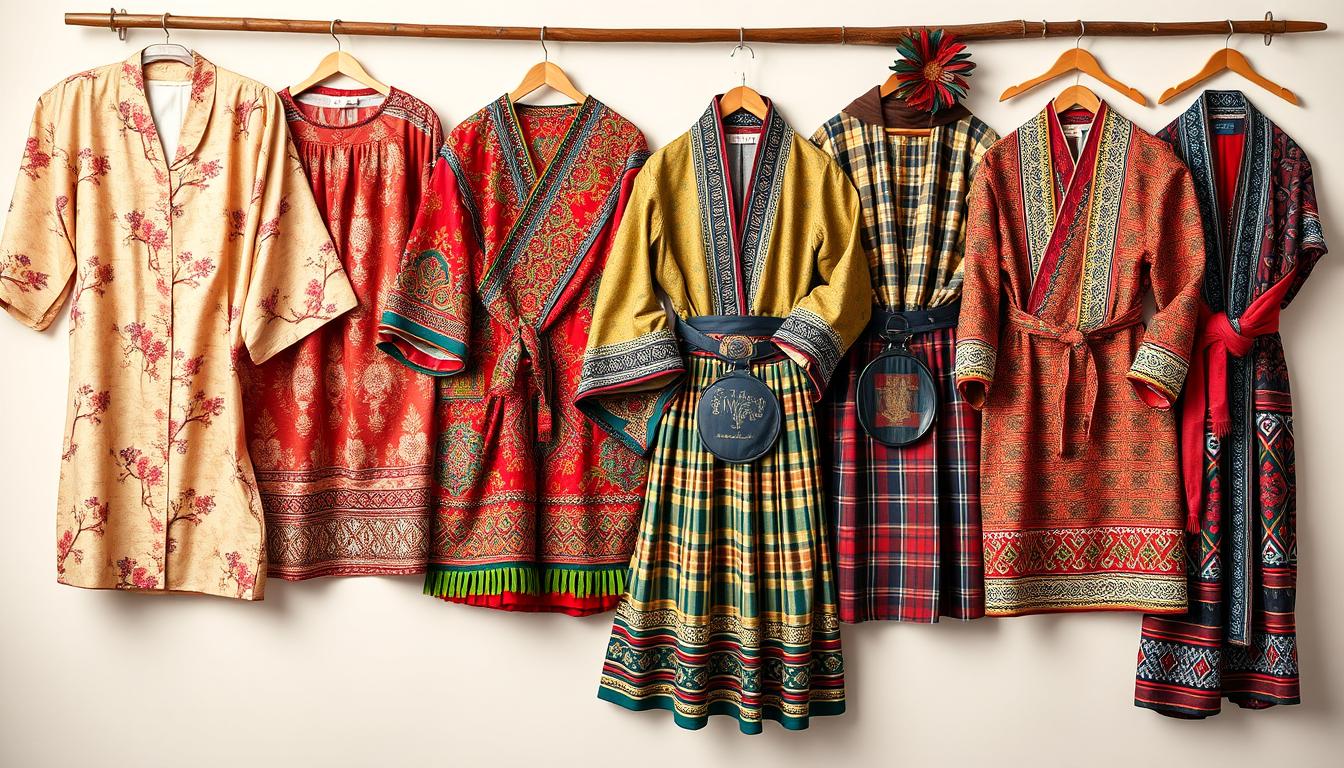
Other iconic traditional garments include the Scottish kilt and the Mongolian deel. The kilt with its tartan patterns symbolizes Scottish pride. The deel reflects the nomadic lifestyle of the Mongolian people with its striking silhouette and intricate embroidery.
These Ethnic Styles and Indigenous Attire not only captivate the eye but also tell a story. They tell of customs, values, and beliefs of the cultures that created them. Exploring these sartorial traditions deepens our appreciation for our shared human experience.

The Symbolism Behind Traditional Outfits
Cultural clothing and traditional dress carry deep meanings. Colors, patterns, and embellishments in these outfits often symbolize spiritual, social, or historical values. This is true across different cultures.
In many indigenous societies, the beadwork, embroidery, and dyed fabrics in traditional outfits show a person’s status. The vibrant colors and detailed designs of these garments express a culture’s values and identity.
“Traditional dress is not just a fashion statement – it’s a tangible representation of a community’s history, traditions, and cultural pride.”
Understanding the symbolism in Fashion Across Cultures is key. Exploring the meanings in Traditional Dress helps us appreciate the diversity and importance of traditional fashion worldwide.
From the meaningful colors of an Indian sari to the detailed stitching of a Hmong costume, each part of traditional attire has a story. By keeping these traditions alive, we protect the cultural heritage that shapes our world.
Traditional Dress in Indigenous Cultures
Around the world, Indigenous Attire shows the deep bond of indigenous peoples with the land and their beliefs. From the bright Ethnic Styles of the Maasai in Africa to the detailed Cultural Clothing of the Inuit in the Arctic, traditional dress is a key part of their identity and heritage.
For many indigenous groups, the materials in their clothes, like animal hides and natural dyes, are closely tied to their environment. The Navajo people of the American Southwest, for example, are famous for their detailed weavings that mirror the desert’s colors and patterns.
“Our traditional dress is not just a fashion statement – it is a sacred expression of who we are as a people. It connects us to our ancestors and the land that sustains us.”
As the world changes, keeping these Indigenous Attire traditions alive is more crucial than ever. Many indigenous communities are working hard to keep their Ethnic Styles and Cultural Clothing alive for future generations. This ensures their unique identities and ways of life stay vibrant and strong.

By celebrating and preserving the traditional dress of indigenous peoples, we honor their cultural heritage. We also gain a deeper understanding and appreciation of the rich diversity in our world. As we explore and appreciate the Indigenous Attire, Ethnic Styles, and Cultural Clothing of these communities, we learn important lessons. We learn about the importance of living in harmony with nature and respecting the unique identities that make us human.
The Evolution of Traditional Fashion
The world is getting more connected, and Global Fashion Trends are changing. Cross-Cultural Fashion and Fashion Across Cultures are big influences. Traditional clothes, once tied to specific places, now mix old and new.
Traditional fashion walks a fine line between old and new. New tech lets old textiles meet modern designs. Designers worldwide keep these traditions alive, adding cultural symbols and skill to their work.
“The true beauty of traditional fashion lies in its ability to transcend boundaries, connecting people from diverse backgrounds through the universal language of style.”
The rise of Global Fashion Trends has made people value traditional Cross-Cultural Fashion more. People want clothes that tell stories, showing off the world’s rich heritage. This has brought back old techniques like hand-weaving and embroidery.
The mix of old and new in Fashion Across Cultures has made fashion exciting and diverse. By celebrating global fashion traditions, we can understand and appreciate our differences better.
Traditional Clothing in Ceremonies and Festivals
Traditional dress is key in cultural festivals and sacred rituals worldwide. The Cultural Clothing, Traditional Dress, and Ethnic Styles show a community’s heritage and beliefs. They are worn to celebrate and honor traditions.
In many indigenous cultures, traditional clothes are crucial in ceremonies. For example, Native American dancers wear elaborate headdresses and body paint at powwows. These items are not just for show; they connect the wearer to their ancestors. African tribes also wear vibrant Traditional Dress for important life events, like rites of passage.
“Fashion is not something that exists in dresses only. Fashion is in the sky, in the street, fashion has to do with ideas, the way we live, what is happening.” – Coco Chanel
Festivals are also filled with Cultural Clothing. Think of the stunning saris at Indian weddings or the beautiful kimonos at Japanese matsuri. These clothes make the event more beautiful and help keep Ethnic Styles alive.
Even as the world gets smaller, traditional clothes in ceremonies and festivals are still very important. They show the lasting value of cultural heritage. By celebrating these Traditional Dress traditions, we honor the diversity that makes our world rich and colorful.
The Role of Fashion in Cultural Diplomacy
Fashion is more than just personal style. It’s a powerful tool in cultural diplomacy. Traditional clothes from around the world show a region’s unique heritage and identity. By sharing these traditions, countries can help others understand and appreciate their culture.
Traditional dress is often seen in official visits and ceremonies. When leaders wear their host country’s traditional clothes, it shows respect and celebration of Cross-Cultural Fashion and International Sartorial Expression. This act can help connect cultures and strengthen diplomatic bonds.
“Fashion has the power to transcend borders and bring people together. It’s a universal language that can communicate the richness and diversity of Fashion Across Cultures.”
Traditional fashion also plays a part in cultural exchange programs, trade exhibits, and festivals. By sharing their traditional dress, countries can highlight their cultural heritage. This helps promote a deeper appreciation for the Cross-Cultural Fashion that enriches our global community.
As the world gets more connected, the role of Fashion Across Cultures in diplomacy will grow. By embracing International Sartorial Expression, nations can build bridges, foster understanding, and celebrate the diversity that makes our world vibrant and dynamic.
The Environmental Impact of Traditional Fashion
The fashion world is facing big environmental challenges. Now, we’re looking closely at traditional and cultural clothes. These styles are becoming more popular as people seek Sustainable Fashion.
Traditional clothes are made with local, natural materials and old techniques. This approach cuts down on waste and pollution. For example, Indian saris and African textiles are made with care, unlike fast fashion.
“The environmental impact of traditional fashion is considerably lower than that of modern, industrialized clothing production.”
Traditional clothes last longer and hold cultural value. This means we don’t need to buy new clothes as often. By keeping these traditions alive, we honor our heritage and help the fashion world become greener.

As we face urgent environmental needs, traditional fashion offers a solution. By learning from the past, we can make Sustainable Fashion and Ethnic Styles work together for a better future.
Reviving Traditional Techniques in Modern Fashion
In the world of Global Fashion Trends, designers are looking back at Traditional Dress for inspiration. They mix old and new, creating unique pieces. This blend of cultures brings back ancient skills in modern fashion.
For example, traditional weaving like ikat patterns from Southeast Asia is making a comeback. Designers use these old methods in their clothes. This adds a special touch and makes their Cross-Cultural Fashion stand out.
“The fusion of traditional and contemporary elements is what makes fashion truly captivating. It’s a way to honor the past while shaping the future.”
Designers are also celebrating the embroidery of India, the lace of Europe, and African textiles. These global Traditional Dress traditions are being reimagined. This not only makes fashion more interesting but also helps artisans and keeps cultural heritage alive.
As fashion keeps changing, traditional techniques are key. Designers who connect with these traditions create amazing clothes. They also help us understand and value the rich cultural heritage of Global Fashion Trends today.
How Traditional Attire Influences Contemporary Fashion
Fashion is always changing, and traditional clothing plays a big role. Designers and fans of fashion love to celebrate the world’s diverse cultures. They find inspiration in the detailed designs and deep meanings of traditional clothes. This mix of Global Fashion Trends, Cross-Cultural Fashion, and Multicultural Clothing makes fashion exciting and varied.
Traditional textiles and embroidery are now part of modern clothes. Designers mix the beauty of hand-made fabrics, like Indonesia’s ikat or West Africa’s kente cloth, with today’s styles. This blend honors cultural heritage and brings a fresh look to the world.
“Fashion is not just about trends, but about the stories we tell through our clothing. By embracing traditional elements, we can celebrate the rich tapestry of human culture and inspire a deeper appreciation for the diversity that makes our world so beautiful.”
The growth of Multicultural Clothing also highlights the importance of traditional attire’s meaning. Clothes like Native American robes or South Asian saris hold deep cultural and spiritual values. Designers now weave these stories into their designs, letting people connect with their heritage.

The fashion world will keep changing, and traditional clothes will keep shaping Global Fashion Trends. By embracing cultural dress, designers and fans can make clothes that are not only stylish but also tell meaningful stories. These stories connect us all as a global community.
Celebrating Diversity Through Fashion
The world’s cultures are rich and diverse, shown in traditional dress codes. These have evolved over centuries. From India’s vibrant saris to Mexico’s detailed huipils, fashion expresses culture and identity.
Embracing these diverse dress codes helps us understand and value different cultures. Traditional clothes show the unique histories and customs of communities. They also challenge narrow beauty standards that have dominated fashion for too long.
By celebrating global fashion, we fight stereotypes and promote inclusivity. Wearing and sharing traditional attire breaks down barriers. It sparks important conversations and fosters respect for our diverse cultural heritage.